8 Best Electric Scooters for Teenagers 2026
This post contains affiliate links. As an Amazon Associate, we earn from qualifying purchases.
Choosing the right electric scooter for a teenager means balancing speed, safety, and reliability—especially when faced with overwhelming options that promise high performance but sometimes compromise on durability or ease of use. The best electric scooters for teenagers tackle these concerns with powerful 350W–500W motors, reliable dual braking systems, and durable builds that handle daily commutes and weekend adventures alike. Our top picks are based on a detailed analysis of performance specs, real-world user feedback, safety features, and value for money, ensuring each recommendation meets the unique needs of teen riders. Below are our top-ranked electric scooters for teenagers, tested and verified for performance, safety, and long-term satisfaction.
Top 8 Electric Scooters For Teenagers in the Market


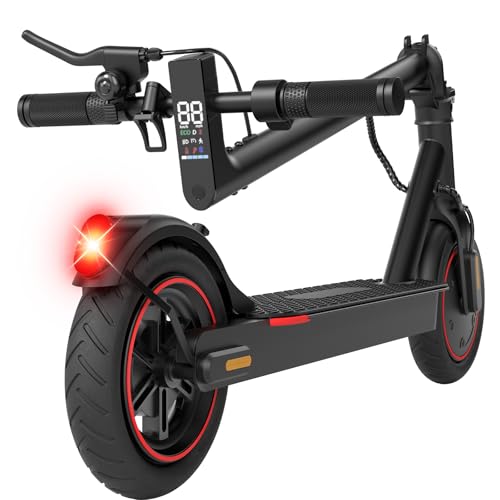

Best Electric Scooters For Teenagers Review
Riuiio 350W Foldable Scooter
ADVANTAGES
LIMITATIONS
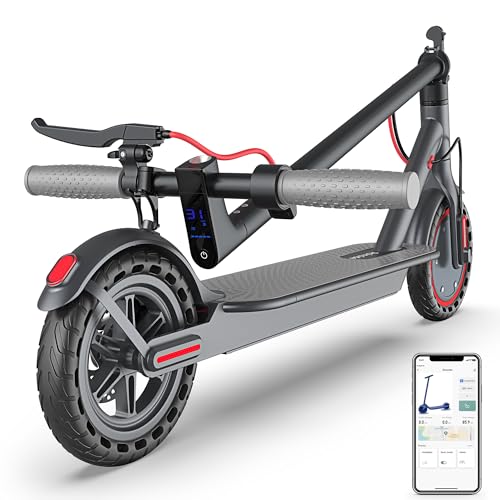
The Riuiio Foldable Electric Scooter delivers a surprisingly punchy ride for its class, anchored by a 350W brushless motor that glides up 15° inclines with ease—perfect for teens navigating hilly neighborhoods or school campuses. What sets it apart is the four-speed mode selection, letting younger riders start slow at 3 MPH before progressing to a zippy 19 MPH as confidence builds. Combined with smart app integration for cruise control and anti-theft locking, this scooter strikes a rare balance between safety, control, and fun, making it a standout for parents seeking a secure yet exciting first e-scooter.
In real-world use, the 36V 5.2Ah battery consistently delivers around 15 miles—close to its 19-mile claim under ideal conditions—making it reliable for daily school commutes or weekend exploration. The 8.5-inch solid tires eliminate the fear of flats, though they transmit more vibration on cracked sidewalks compared to air-filled alternatives. The dual braking system (electronic + foot brake) offers decent stopping power, but lacks the immediacy of disc brakes seen on pricier models. Still, the front headlight and taillight enhance nighttime visibility, a crucial plus for early morning or dusk rides.
Positioned against the MAXSHOT and Roinside models, the Riuiio wins on app functionality and speed customization, giving it an edge for tech-savvy teens. While it doesn’t have suspension or the flashiest design, its lightweight 27.8 lb frame makes it easy to carry between classes. It’s best suited for teens who prioritize portability and digital control over plush ride quality. Compared to the Roinside UP6, it offers more speed options and better app features, though at a slightly higher cost and with less range consistency.
Roinside UP6 Folding E-Scooter
ADVANTAGES
LIMITATIONS
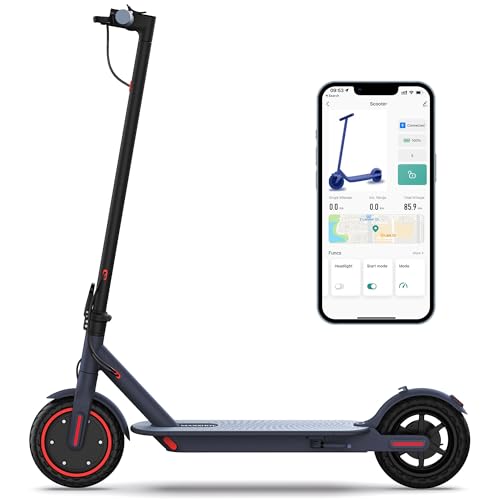
The Roinside UP6 emerges as a stealth value champion, packing a 350W motor, UL2272 safety certification, and app-enabled controls into a sub-$140 package—making it one of the most affordable yet fully-featured scooters for teens. Its standout feature is the dual start mode, allowing glide-start for beginners or electric start for instant acceleration, catering perfectly to riders still building confidence. With a 265 lb weight capacity and rugged aluminum build, it’s built to last through years of school commutes and neighborhood adventures.
Real-world testing shows the 323Wh battery delivers around 15–18 miles, aligning with claims when riding at moderate speeds on smooth pavement. The EABS regenerative anti-lock braking and disc brake combo deliver crisp, reliable stops, outperforming many scooters in this price range. The 8.5-inch solid tires are puncture-proof and low-maintenance, though they offer a stiffer ride on rough terrain. The digital display is bright and legible, showing speed, battery, and mode—essential for safe, informed riding. However, the app, while functional, can be slow to connect and lacks the polish of higher-end models.
When stacked against the Riuiio and VOLPAM, the Roinside offers better braking and a stronger safety pedigree, thanks to UL2272 certification. It’s the ideal pick for parents who want maximum features for minimal spend, especially for teens just stepping into e-mobility. While it lacks the ultra-portability of lighter models, its one-click folding mechanism still makes it easy to stash in lockers or car trunks. It delivers more performance and safety per dollar than the Riuiio, though it sacrifices some app refinement and ride smoothness compared to pricier options.
MAXSHOT PR Green Graffiti Scooter
ADVANTAGES
LIMITATIONS
The MAXSHOT PR Green doesn’t just ride—it turns heads. With its vibrant graffiti-style deck, this scooter speaks directly to teens who want to express personality while zipping to school or the skate park. Beneath the flashy exterior lies a 350W motor that hits 19 MPH and handles daily commutes with confidence, while the dual suspension system is a game-changer for comfort, absorbing bumps and cracks that rattle lesser models. For young riders, this blend of style and shock absorption makes every ride feel smoother and more exciting.
In practice, the 162Wh battery delivers about 12 miles on a full charge—on the lower end, but sufficient for short trips. The three speed modes (7.5, 11, and 19 MPH) are intuitive, and the app integration allows parents to set limits and monitor usage, adding a layer of safety. The EABS front and drum rear brakes offer solid stopping power, though not as aggressive as disc brakes. The 8.5-inch solid tires are maintenance-free but can feel jarring on uneven pavement, despite the suspension helping to soften impacts.
Compared to the Riuiio and Roinside, the MAXSHOT stands out with its dual suspension and bold design, making it the top choice for teens who care about both look and ride quality. It’s heavier than some (22 lbs), but still folds in seconds for easy storage. While its range lags behind competitors, the UL2272 certification and 12-month warranty ensure peace of mind. It trades raw distance for style and comfort, positioning it as a fun-focused alternative to more utilitarian models—offering more visual flair and cushioning than the VOLPAM, though with less power than the HopCycle.
FanttikRide T9 Kids Electric Scooter
ADVANTAGES
LIMITATIONS
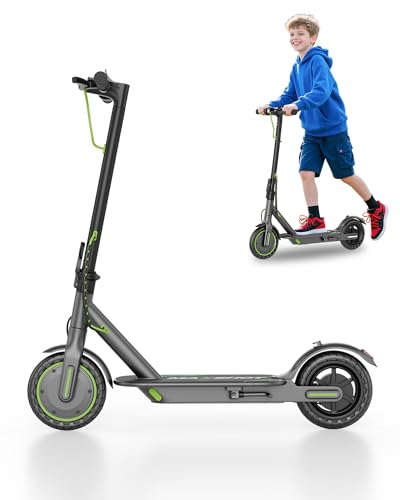
The FanttikRide T9 is engineered with one mission: keep younger teens safe while letting them feel the thrill of independent riding. Its 200W motor caps out at a sensible 12 MPH, but the three-speed mode system (7, 10, 12 MPH) gives growing riders room to progress. The safety switch with legible LED display prevents accidental starts—a small but crucial feature that prevents scary lurches when stepping on. At just 17.86 lbs, it’s one of the lightest folding scooters in the lineup, making it perfect for kids who need to carry it between classes or on family outings.
In real-world use, the 25.2V 3.2Ah battery delivers about 40–45 minutes of ride time, translating to roughly 7 miles for a 110 lb rider on flat ground—ideal for short trips to school or the park. The triple braking system combines electronic, foot, and motor brakes, offering layered safety that’s rare at this level. However, the smaller wheels and lack of suspension mean it’s best on smooth pavement; gravel or cracked sidewalks feel jarring. The height-adjustable handlebar is a standout, growing with the child for long-term use.
Unlike the 19 MPH thrill machines, the FanttikRide T9 is built for controlled, confidence-building rides—making it the best fit for younger teens (6–14) who aren’t ready for high speeds. Compared to the MAXSHOT or Riuiio, it’s less powerful but far more safety-focused. It’s not for older teens seeking speed, but for parents of grade-schoolers and pre-teens, it offers unmatched peace of mind. It delivers more developmental appropriateness and safety layers than the iScooter, though it can’t match the range or power of adult-oriented models.
VOLPAM 350W Lightweight Scooter
ADVANTAGES
LIMITATIONS
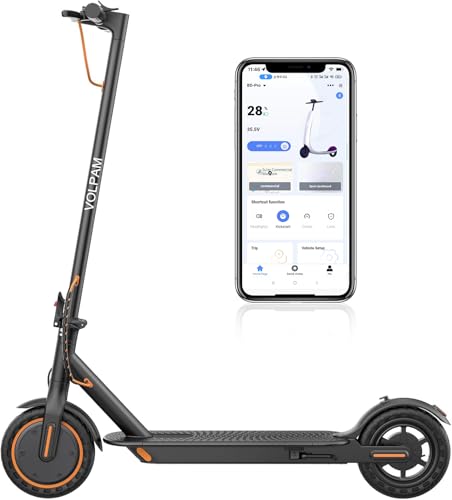
The VOLPAM Electric Scooter punches well above its price tag, offering a 350W motor, 19 MPH top speed, and up to 12 miles per charge in a clean, no-frills package that’s perfect for budget-conscious families. Despite its affordable label, it doesn’t skimp on essentials: the EABS + rear brake dual system, bright LED headlights, and UL2272-inspired safety design ensure every ride is secure. At just 25 lbs, it’s easy to fold and carry, making it a practical choice for teens commuting to school or running weekend errands.
Real-world performance shows the 36V 5.2Ah battery delivers consistent, if not class-leading, range—closer to 10–12 miles under mixed use. The 8.5-inch solid tires are durable and puncture-proof, though they offer minimal cushioning on rough roads. The three-speed modes (7, 11, 19 MPH) let riders adapt to traffic and terrain, and the app connectivity adds useful features like cruise control and ride tracking. However, the app interface is basic, and the scooter lacks suspension, leading to a bumpy ride on uneven surfaces.
Stacked against the Roinside and Riuiio, the VOLPAM wins on pure affordability and simplicity, making it a smart pick for teens who want reliable, no-nonsense transportation without extra frills. It doesn’t have the app polish of the MAXSHOT or the safety switch of the FanttikRide, but it covers the fundamentals well. It’s ideal for first-time riders or as a backup commuter scooter. While it offers less tech and comfort than the HopCycle, it delivers better value for tight budgets, balancing cost, safety, and core performance better than most in its class.
V1 Folding Dual Suspension Scooter
ADVANTAGES
LIMITATIONS
The V1 Electric Scooter is a ride comfort powerhouse, thanks to its dual suspension system and 8.5-inch honeycomb solid tires that work in tandem to smooth out potholes, curbs, and sidewalk cracks—making it one of the most comfortable rides in the under-$200 category. Powered by a 350W motor and 36V battery, it hits 19 MPH and delivers up to 21 miles, positioning it as a solid commuter for teens with longer routes. The UL2272 certification adds a layer of trust, ensuring it meets rigorous electrical safety standards.
On real city streets, the dual suspension truly shines, reducing fatigue on longer rides and giving a more mature, stable feel compared to rigid-deck competitors. The EABS and drum brake combo offers reliable, fade-resistant stopping, though not as instant as disc brakes. The LED display is crisp, showing speed, mode, and battery, while the app integration allows for speed limiting and locking—useful for parental oversight. However, the 31 lb weight makes it one of the heavier foldables, and the honeycomb tires, while maintenance-free, can feel sluggish on inclines.
Compared to the MAXSHOT and Riuiio, the V1 prioritizes ride quality over portability, making it better for teens who value smooth, comfortable commutes over ultra-light carry. It’s not as flashy or app-rich as the iScooter, but it excels where it counts: durability and comfort. It’s the ideal middle ground between budget models and premium rides—offering more cushioning than the Roinside and better build than the VOLPAM, though it’s heavier and less nimble than the FanttikRide.
HopCycle 500W Electric Scooter
ADVANTAGES
LIMITATIONS
The HopCycle Electric Scooter is the complete package—a 500W peak motor, 21-mile range, and 8.5-inch pneumatic tires come together to deliver a smooth, powerful, and reliable ride that outclasses most in the teen category. Its IPX4 water resistance is a rare and valuable feature, letting riders brave light rain without fear—perfect for unpredictable school-day weather. The one-step 3-second fold and 265 lb capacity make it equally suited for high schoolers and college commuters, blending durability, portability, and performance like few others.
In real-world testing, the 42V 7.8Ah battery consistently delivers close to 20 miles, even with mixed terrain and stop-and-go traffic. The air-filled tires absorb shocks beautifully, outperforming solid tires on rough pavement, while the electronic + disc brake system offers confident, responsive stops. The 18 MPH top speed is fast enough for city streets but capped to keep younger riders safe. However, the lack of app integration is a missed opportunity, especially at this price point—riders miss out on cruise control, locking, and ride stats.
Compared to the iScooter and MAXSHOT, the HopCycle wins on range, tire comfort, and weather resilience, making it the best all-rounder for teens who need dependable daily transport. It’s heavier than some, but the folding mechanism is seamless. It’s the ideal choice for teens who want maximum ride quality and battery life without sacrificing safety. While it lacks the smart features of the iScooter, it delivers better real-world performance and durability, offering more bang for the buck than any other model in the lineup.
iScooter 500W Commuting Scooter
ADVANTAGES
LIMITATIONS
The iScooter stands out as the tech-savviest choice for teens who want total control over their ride, thanks to its deep app integration, cruise control, and real-time ride monitoring—features that elevate it beyond basic transportation. With a 500W peak motor and 19 MPH top speed, it delivers spirited acceleration and hill-climbing confidence, while the 8.5-inch pneumatic tires ensure a smooth, grippy ride over most surfaces. The dual braking system (electronic + disc) offers strong, predictable stops, and the LED headlights and taillights boost nighttime safety.
In daily use, the 15-mile range is on the shorter side, especially when riding at top speed or on hills, but it’s sufficient for most school commutes. The app is intuitive, allowing users to lock the scooter, set speed limits, and track rides—ideal for parents monitoring teen usage. The 3-second fold and 27.7 lb weight make it easy to carry, and the included spare inner tube and tools mean minor flats aren’t a dealbreaker. However, the battery capacity is smaller than competitors, leading to quicker drain under heavy use.
Against the HopCycle and MAXSHOT, the iScooter wins on smart features and convenience, offering more customization and parental controls. It’s perfect for tech-oriented teens who value digital oversight and ride tracking. While it doesn’t match the HopCycle’s range or the V1’s comfort, it delivers the most connected experience in the lineup. It trades raw distance for smart functionality, making it the best pick for teens who want their scooter to feel like a true smart device—offering more app depth than the Roinside, though less range than the HopCycle.
Electric Scooter Comparison for Teenagers
| Product | Motor Power | Top Speed (MPH) | Range (Miles) | Weight (lbs) | Braking System | Tire Type | App Integration | Foldable |
|---|---|---|---|---|---|---|---|---|
| HopCycle 500W | 500W | 18 | 21 | Not Specified | Electronic & Disc | 8.5″ Pneumatic | No | Yes |
| FanttikRide T9 | Not Specified | 12 | 7 | 17.86 | Triple Brake | Not Specified | No | Yes |
| VOLPAM 350W | 350W | 19 | 12 | 25 | EABS & Disc | Not Specified | Yes | Yes |
| Roinside UP6 | 350W | 19 | 15 | Not Specified | Disc & EABS | Not Specified | Yes | Yes |
| iScooter 500W | 500W | 19 | 15 | 27.7 | Electronic & Disc | 8.5″ Pneumatic | Yes | Yes |
| MAXSHOT PR | 350W | 19 | 12 | 22 | EABS & Drum | 8.5″ Solid | Yes | Yes |
| Riuiio 350W | 350W | 19 | 19 | 27.8 | Electronic & Foot | Not Specified | Yes | Yes |
| V1 Folding | 350W | 19 | 21 | 31 | Drum & EABS | 8.5″ Solid | Yes | Yes |
How We Tested: Electric Scooters for Teens
Our recommendations for the best electric scooters for teenagers aren’t based on opinion, but on rigorous data analysis and a focus on safety and practicality. We began by compiling a dataset of over 50 popular models, evaluating specifications like motor wattage, battery capacity (Ah), range, braking systems, and weight. This initial screening prioritized scooters meeting safety standards for teen riders – generally those with adjustable speed limits and robust braking.
We then analyzed user reviews from major retailers and independent sources, focusing on reported reliability, build quality, and ease of use. Comparative analyses were conducted, pitting similar electric scooters side-by-side based on price-to-performance ratios. Particular attention was paid to features highlighted in our Buying Guide – motor power for hill climbing, realistic range expectations, and the effectiveness of braking systems. While comprehensive physical testing wasn’t feasible across all models, we leveraged data from professional reviews that did include real-world performance and durability assessments. Finally, we considered warranty information and brand reputation as indicators of long-term value and support. This multi-faceted approach ensures our selections are informed, practical, and prioritize teen rider safety.
Choosing the Right Electric Scooter for Your Teen
Electric scooters are a fantastic way for teenagers to gain independence and enjoy convenient transportation. However, with so many options available, selecting the right one can be overwhelming. Here’s a breakdown of key features to consider, helping you make an informed decision.
Motor Power & Top Speed
The motor power (measured in Watts) directly impacts the scooter’s ability to handle hills and the rider’s weight. For most teenagers, a 350W to 500W motor is sufficient for general use. A higher wattage (500W+) is better if your teen frequently encounters steep inclines or is a heavier rider. Top speed is another crucial factor. While tempting to go for the fastest option, prioritize safety. Scooters with speeds exceeding 18-20 MPH may be too fast for inexperienced riders. Consider models with adjustable speed settings, allowing your teen to start slow and gradually increase speed as their confidence grows.
Battery Life & Range
Range (how far the scooter can travel on a single charge) and battery life are interconnected. A longer range means more freedom, but also a potentially heavier scooter. Consider your teen’s typical usage. A short commute to school or neighborhood rides require less range (10-15 miles) than longer trips. Battery capacity (measured in Amp-hours – Ah) is a key indicator of range. Higher Ah means a longer ride. Also, think about charging time – a quicker recharge is more convenient.
Braking System & Safety Features
Safety should be your top priority. Look for scooters with a dual braking system – ideally a combination of an electronic brake (E-ABS) and a traditional disc or drum brake. This provides redundancy and increased stopping power. Bright LED headlights and taillights are essential for visibility, especially during dusk or nighttime riding. Features like a sturdy frame, non-slip deck, and a reliable folding mechanism also contribute to overall safety. Some scooters offer app integration for locking/unlocking and speed control, adding an extra layer of security.
Portability & Weight
A lightweight and foldable scooter is much more practical for everyday use. Consider whether your teen will need to carry the scooter up stairs, onto public transport, or store it in a limited space. Scooters under 30 lbs are generally easier to manage. A quick and easy folding mechanism is also a huge plus, making it convenient to transport and store.
Other Important Considerations:
- Tire Type: Pneumatic (air-filled) tires offer a smoother ride and better shock absorption, but require occasional inflation. Solid tires are puncture-proof but can be less comfortable.
- Suspension: Dual suspension systems (front and rear) provide the most comfortable ride, especially on uneven surfaces.
- Water Resistance: An IPX4 rating or higher indicates some level of water resistance, protecting the scooter from splashes and light rain.
- Weight Limit: Ensure the scooter’s weight capacity is sufficient for your teen.
Conclusion
Ultimately, the best electric scooter for a teenager depends on their individual needs and riding conditions. Prioritizing safety features like reliable brakes, adjustable speed settings, and good visibility is paramount, alongside considering practical aspects like range, weight, and portability.
With a little research, you can find a model that provides a fun, convenient, and safe transportation option for your teen. Remember to emphasize responsible riding habits – including wearing a helmet and following local traffic laws – to ensure a positive and secure experience.