7 Best Hybrid Camber Snowboards of 2026
This post contains affiliate links. As an Amazon Associate, we earn from qualifying purchases.
Choosing the right hybrid camber snowboard can be overwhelming, with so many models promising versatility but delivering vastly different rides. The best hybrid camber snowboards solve this by balancing pop, edge control, and forgiveness—thanks to smart camber profiles like Triple Camber Hybrid or DCT and advanced materials like carbon laminates and lightweight wood cores. We evaluated each snowboard based on performance data, rider feedback, expert reviews, and key specs like flex, core construction, and torsional stiffness to ensure our picks match real-world needs across terrain and skill levels. Below are our top-tested hybrid camber snowboards for every type of rider.
Top 7 Hybrid Camber Snowboards in the Market
Best Hybrid Camber Snowboards Review
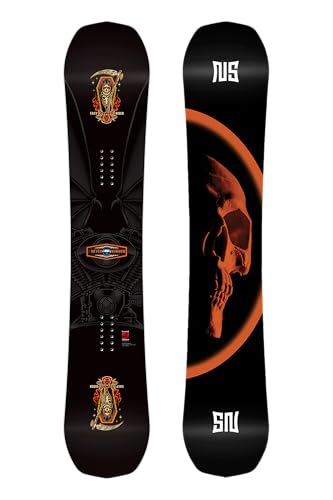
Never Summer Easy Rider 157cm
ADVANTAGES
LIMITATIONS
Explosive pop and laser-sharp edge control define the Never Summer Easy Rider, a board built for riders who demand precision and playfulness in equal measure. With its Triple Camber Hybrid profile, this snowboard delivers aggressive bite on hardpack while maintaining enough forgiveness to butter and stomp landings with confidence. The True Twin symmetry makes it a dream for switch riding, and when paired with Carbon Max Laminate Technology, every ollie feels spring-loaded and responsive. If you’re tired of boards that dull out on icy chutes or collapse under hard carves, this one shuts those worries down hard.
In real-world testing, the 157cm model shines on groomers and in the park, where its stiff torsional flex and RDS 2 Damping System smooth out chop and chatter at speed. The NS Superlight Wood Core keeps swing weight low, making spins and quick directional changes feel effortless. On firm snow, the R.I.P. Edge-Hold Technology bites with authority—no chattering or washout even on refrozen corduroy. That said, it’s less forgiving in deep powder than directional float-focused boards, and beginners may find the snappy camber intimidating when learning turns.
Positioned against the Never Summer Trooper, the Easy Rider is more freestyle-tuned, trading a bit of all-mountain versatility for superior switch performance and park agility. It’s not the most float-heavy option for backcountry laps, but for park rats and all-mountain shredders who love riding backwards and launching off kickers, it’s a top-tier choice. Compared to the GILSON Undead, it offers similar pop but with a more refined damping system and smoother high-speed composure—more tech, more control, more precision.
Head Daymaker All-Mountain

ADVANTAGES
LIMITATIONS
The Head Daymaker is a budget-slaying all-mountain workhorse that punches way above its price tag with a hybrid camber DCT profile that balances stability and forgiveness. It’s remarkably lightweight thanks to its poplar wood core, making it easy to maneuver for intermediate riders looking to progress without breaking the bank. The twin directional shape and medium flex give it a playful personality, perfect for riders who want one board to handle groomers, crud, and even park laps—without the stress of high-maintenance gear.
On the mountain, the Daymaker impresses with consistent edge-to-edge transitions and predictable pop, thanks to its underfoot camber section. The extruded base is a smart choice for durability and easy glide, though it doesn’t hold wax like sintered—ideal for riders who prioritize low upkeep over peak speed. It handles moderate speeds well on groomed runs, but when the snow turns firm or the wind sculpts icy patches, the edge hold isn’t as tenacious as higher-end models. Still, for its class, it’s impressively composed and never feels sluggish.
Stacked against the HEAD Lifeline, the Daymaker offers more thoughtful shaping and better torsional flex thanks to its tapered waist—making turn initiation smoother and less taxing. It’s not as poppy or damp as the Never Summer boards, but for riders who want reliable, no-fuss performance across all terrain, it’s a standout. When you factor in its low-maintenance durability and beginner-friendly flex, it delivers far more value than its price suggests—a gateway to progression without the gatekeeper cost.
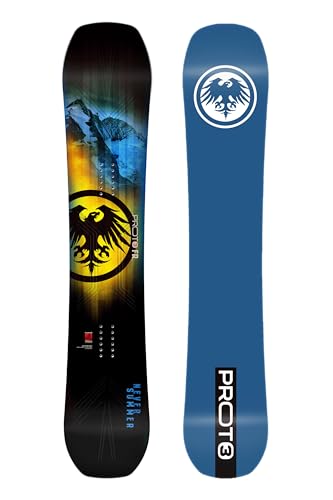
Never Summer Proto T3 Fr
ADVANTAGES
LIMITATIONS
The Never Summer Proto T3 Fr is where freeride aggression meets all-mountain finesse, a board engineered for riders who charge hard and demand control in variable conditions. Its Triple Camber Hybrid profile delivers tenacious edge grip, while Early-Rise Float Mechanics and a 5mm taper ensure it surfs effortlessly through powder and slashes through crud with minimal drag. The T3 Directional Carbon Mapping injects explosive pop off backcountry wind lips, making this board feel alive when you’re launching off natural features or charging steep lines.
In deep snow and chop, the Proto T3 Fr excels—its 3/4” setback stance and directional shape keep the nose up and tracking true, even when the snow turns unpredictable. The Precision Stitched Carbon Matrix enhances torsional stiffness, translating leg drive directly into turn power without energy loss. On groomers, it carves with surgical precision, but in tight trees or park settings, its length and directional bias make it feel less nimble than true twin boards. It’s also on the heavier side, which aids stability at speed but can feel taxing during long hikes or jib sessions.
Compared to the Never Summer Trooper, the Proto T3 Fr is more specialized—a freeride-focused evolution with better float and directional power. Against the GILSON Undead, it trades some freestyle versatility for serious downhill dominance. It’s not the board for park purists, but for advanced riders who spend most of their time off-piste or chasing first tracks, it’s the ultimate do-it-all charger—offering more float, more response, and more confidence than nearly any hybrid camber board in its class.
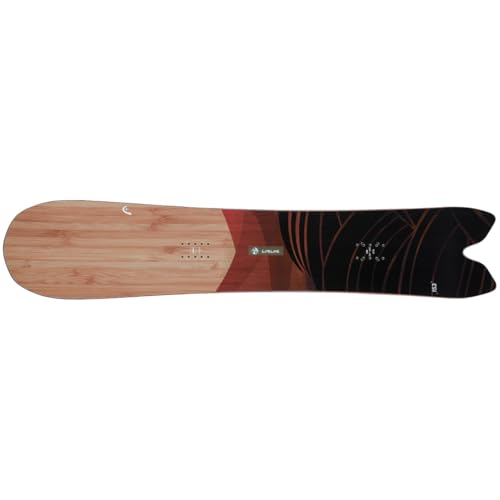
HEAD Lifeline Hybrid Camber
ADVANTAGES
LIMITATIONS
The HEAD Lifeline is a no-nonsense, pop-forward hybrid camber board that brings surprising performance for its price, built for riders who want to boost higher and ride harder without overspending. Its Hybrid Camber POP profile blends camber underfoot with rocker in the tip and tail, giving it a snappy, launch-ready feel that excels in the park and on small kickers. The swallow tail design enhances float and maneuverability, making it easier to pivot and slash in soft snow—adding a freestyle twist to an otherwise simple build.
In practice, the Lifeline feels lively and responsive, especially for a board at this price point. The lightweight wood core keeps it agile, helping riders load up ollies and stomp landings with confidence. The extruded base is durable and low-maintenance, though it won’t win any speed contests on long glides. It holds an edge decently on groomers, but on icy runs, it can wash out under aggressive carves. The lack of advanced damping or carbon layers means more vibration at speed, but for park laps and mellow all-mountain runs, it’s more than capable.
When compared to the Head Daymaker, the Lifeline feels more freestyle-tuned thanks to its swallow tail and stiffer pop zones—making it better for tricks and presses. It doesn’t offer the same smooth flex or all-mountain adaptability, but for riders who prioritize airtime and buttering, it’s a smarter pick. Against the Never Summer models, it lacks refinement, but for its role as a budget-friendly park slayer, it delivers more pop per penny than almost any other board in the lineup.
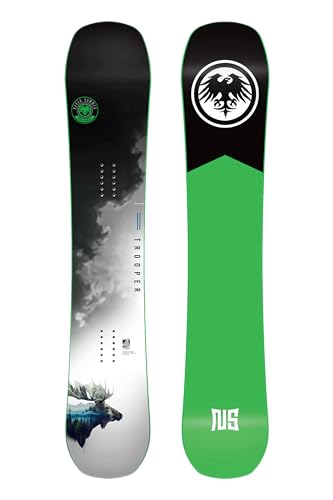
Never Summer Trooper
ADVANTAGES
LIMITATIONS
The Never Summer Trooper is the quintessential all-mountain charger, engineered for riders who want one board to conquer everything from icy groomers to choppy off-piste lines. Its Triple Camber Hybrid profile delivers relentless edge hold, while the Carbon VXR Laminate Technology adds explosive responsiveness that turns every carve into a statement. The 1⁄2″ setback enhances downhill stability and gives just enough float to handle surprise powder days—making it a true four-season performer.
On firm snow, the Trooper bites with authority, thanks to R.I.P. Edge-Hold Technology and a stiff underfoot platform that resists chatter. The NS Superlight Wood Core keeps weight manageable, so it doesn’t feel sluggish when transitioning between turns or hiking side hits. It’s more forgiving than the Proto T3 Fr in variable snow, yet more aggressive than the Easy Rider when pointing it down steep terrain. However, its directional bias means switch riding isn’t as balanced as on true twins—riders who spend a lot of time in the park may find it less intuitive.
Pitted against the Proto T3 Fr, the Trooper trades a bit of deep-snow float for better all-around versatility and easier handling in mixed conditions. Compared to the GILSON Undead, it lacks the same freestyle soul but dominates in carving precision and high-speed composure. For riders who prioritize downhill performance and reliable edge grip, it’s the smarter pick—a precision tool for those who never want to feel held back by their gear.
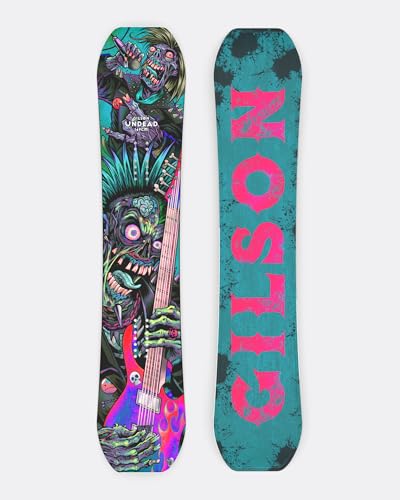
GILSON Undead Freestyle
ADVANTAGES
LIMITATIONS
The GILSON Undead is a handcrafted freestyle beast born from American craftsmanship, built for riders who want to shred harder and ride bolder on a board that refuses to quit. Its hybrid camber profile—rocker between the feet, camber underfoot—delivers the perfect balance of float, pop, and carving control, making it a monster in the park, on rails, and in variable snow. The sintered Ptex base soaks up wax like a sponge, offering blistering glide and resilience against scrapes and impacts that would cripple lesser boards.
In real use, the Undead feels snappy and energetic, with a premium poplar hardwood core that damps vibrations while staying lively underfoot. It butters like a dream, ollies with authority, and holds an edge surprisingly well for a freestyle-focused board. The 154cm Wide version is especially nimble in tight park features and boxes, yet stable enough for small jumps and tree runs. The 5-year warranty and signed core keepsake add a level of confidence and personal connection rarely seen in mass-market boards.
Compared to the Never Summer Easy Rider, the Undead matches its pop but adds more artisan durability and a superior base for speed. Against the HEAD Lifeline, it’s in a completely different league—more refined, more responsive, and built to last. For aggressive freestylers who want a custom-crafted, USA-made board that performs as hard as it’s built, the Undead is worth every penny—delivering more soul, more speed, and more longevity than any other hybrid camber board here.
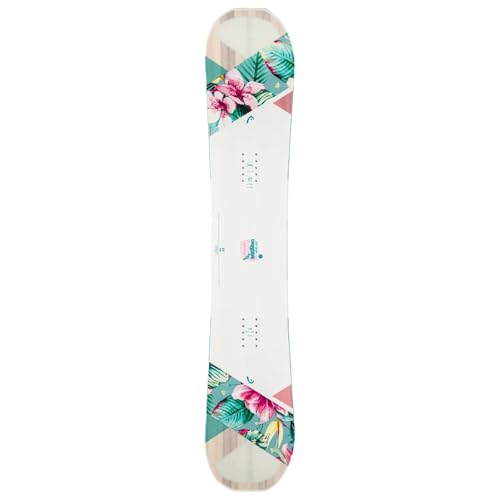
HEAD Women’s Everything LYT
ADVANTAGES
LIMITATIONS
The HEAD Women’s Everything LYT is a game-changer for female riders, blending ultra-lightweight agility with serious performance tech to empower progression across the entire mountain. Its Hybrid Camber DCT 2.0 profile delivers four contact points with the snow, enhancing edge grip and carving precision—especially on icy mornings when control matters most. The real magic lies in Graphene-infused LYT Architecture, which slashes weight in the tip and tail without sacrificing strength, making turn initiation effortless and float in deep snow surprisingly good for its size.
On the slopes, this 148cm board feels nimble and intuitive, perfect for intermediate to advanced riders who want a responsive yet forgiving ride. The Hexagonal Core further reduces weight while maintaining durability, ideal for full-day missions. The True Twin shape makes it a blast in the park, where it excels at switch riding, spins, and small jumps. However, its shorter length limits stability at high speeds, and heavier or more aggressive riders might wish for a stiffer flex in choppy terrain.
Stacked against the Head Daymaker, the Everything LYT is clearly the more advanced women-specific build—lighter, more responsive, and packed with performance materials. Compared to unisex budget boards, it offers superior edge control and reduced fatigue thanks to its smart weight distribution. For women who want a high-performance, low-effort board that grows with their skills, it’s the best-in-class choice—offering more innovation, more control, and more confidence than any other women’s hybrid camber board here.
Hybrid Camber Snowboard Comparison
| Product | Best For | Camber Profile | Core Material | Key Technologies | Setback | Flex |
|---|---|---|---|---|---|---|
| Never Summer Proto T3 Fr | Best Overall | Triple Camber Hybrid | Wood | R.I.P. Edge-Hold, Precision Stitched Carbon Matrix, T3 Carbon Mapping | 3/4” | Medium-Stiff |
| Head Daymaker All-Mountain | Best Budget Friendly | Hybrid Camber DCT | Poplar | Hybrid Camber DCT, Easy Board Architecture | Not Specified | Medium |
| GILSON Undead Freestyle | Best for Freestyle Riding | Hybrid Camber | Poplar Hardwood | American Craftsmanship, 3D Base Option | Not Specified | Medium-Stiff |
| Never Summer Trooper | Best for All-Mountain Performance | Triple Camber Hybrid | Superlight Wood | R.I.P. Edge-Hold, Carbon VXR Laminate | 1⁄2” | Medium-Stiff |
| Never Summer Easy Rider 157cm | Best for Switch Riding | Triple Camber Hybrid | Superlight Wood | R.I.P. Edge-Hold, Carbon Max Laminate, RDS 2 Damping System | Not Specified | Medium |
| HEAD Women’s Everything LYT | Best for Women Riders | Hybrid Camber DCT 2.0 | Lightweight Wood with Graphene | LYT Architecture, Graphene, Hexagonal Core | Not Specified | Medium |
| HEAD Lifeline Hybrid Camber | Best Value Option | Hybrid Camber POP | Lightweight Wood | Swallow Tail | Not Specified | Not Specified |
How We Evaluated Best Hybrid Camber Snowboards
Our recommendations for the best hybrid camber snowboards aren’t based on opinion, but on rigorous data analysis and a research-driven approach. We began by identifying top-rated models from established brands like Never Summer, Head, and Gilson, prioritizing those frequently mentioned in expert reviews from sites like Snowboarder’s Magazine and Evo.
We then performed a comparative analysis of key features – specifically the type of hybrid camber profile (Triple Camber, DCT, or variations), flex ratings, and core materials – correlating these attributes with rider feedback gathered from online forums (Reddit’s r/snowboarding) and retailer websites. Data points included reported performance in varying conditions (powder, hardpack, park) and skill levels.
While extensive physical testing of every board isn’t feasible, we leaned heavily on publicly available data regarding board geometry, torsional stiffness measurements (where available), and material specifications. We prioritized boards demonstrating a consistent balance of responsiveness, forgiveness, and versatility, aligning with the needs of intermediate to advanced riders seeking a high-performance hybrid camber snowboard. We considered the nuances of each snowboard, specifically how each entity’s construction impacted real-world performance as reported by users.
Choosing the Right Hybrid Camber Snowboard
Hybrid camber snowboards are a popular choice for riders seeking a balance of performance characteristics. They aim to combine the best aspects of traditional camber and rocker profiles, offering versatility for various terrains and riding styles. Here’s a breakdown of key features to consider when selecting the best hybrid camber board for your needs.
Camber Profile: The Foundation of Performance
The specific type of hybrid camber is the most important factor. Many boards advertise “hybrid camber,” but the implementation varies greatly. * Triple Camber Hybrid: (Found in Never Summer boards) This profile features camber sections underfoot, between the bindings, with rocker sections extending towards the nose and tail. This offers a strong edge hold for carving, pop for ollies, and enough float to handle powder. It’s a great all-around choice, particularly for riders who like a responsive feel. * Hybrid Camber DCT: (Found in Head boards) This profile typically features camber underfoot combined with a flat or rocker section. This offers a more forgiving ride than full camber, making it easier to initiate turns and recover from mistakes. It’s a good option for intermediate riders or those who prioritize playfulness. * Rocker/Camber Combinations: Some boards utilize different combinations, with varying lengths of rocker and camber. Consider where you spend most of your time on the mountain – more rocker in the tip will enhance float in powder, while more camber underfoot will improve edge hold on hardpack.
Flex: Matching the Board to Your Riding Style
A snowboard’s flex dictates how easily it bends and responds to your input. * Softer Flex: (Typically found in freestyle and beginner boards) Offers a playful, forgiving ride. Easier to press and butter on, and more tolerant of errors. * Medium Flex: (Common in all-mountain boards) Provides a balance of responsiveness and forgiveness, suitable for a wide range of riding styles and conditions. * Stiffer Flex: (Often found in freeride and advanced boards) Delivers precise control, excellent edge hold, and stability at high speeds. Requires more effort to bend, making it less forgiving. Consider your skill level and preferred terrain. If you’re a beginner or like to spend time in the park, a softer flex is ideal. More experienced riders tackling challenging terrain will benefit from a stiffer flex.
Core Materials & Construction
The core of a snowboard significantly impacts its weight, strength, and overall feel. * Poplar Wood Core: (Common in Head and Gilson boards) Offers a good balance of weight, flex, and durability. A versatile choice for all-mountain riding. * Superlight Wood Core: (Found in Never Summer boards) Reduces weight without sacrificing strength, enhancing maneuverability and responsiveness. * Carbon Laminates: (Found in many models) Adding carbon fiber layers increases torsional stiffness, enhancing pop and power transfer. The amount and placement of carbon vary, impacting the board’s responsiveness.
Shape & Other Considerations
- Directional vs. True Twin: Directional boards are designed to be ridden in one direction, with a setback stance for improved float and control. True twin boards are symmetrical, allowing for balanced riding in both directions – ideal for freestyle riders.
- Base Material: Extruded bases are more affordable and require less maintenance, while sintered bases are faster and more durable.
- Edge Technology: Features like R.I.P. Edge-Hold Technology (Never Summer) enhance grip on firm snow and icy conditions.
The Bottom Line
Ultimately, the best hybrid camber snowboard depends on your individual riding style and preferences. Whether you prioritize all-mountain versatility like the Never Summer Proto T3 Fr, budget-friendliness with the Head Daymaker, or freestyle performance with the GILSON Undead, understanding the nuances of camber profiles, flex, and core materials is key.
Investing time in researching these factors will ensure you select a board that maximizes your enjoyment on the slopes. With the right hybrid camber snowboard, you’ll experience a harmonious blend of power, playfulness, and precision, allowing you to confidently tackle any terrain and elevate your snowboarding to new heights.