
8 Best Longboards for Commuting 2026
This post contains affiliate links. As an Amazon Associate, we earn from qualifying purchases.
Commuting long distances on uneven city streets can be a jarring, tiring experience with the wrong longboard, especially when stability, comfort, and durability are compromised. The best longboard commuting setups solve this with features like drop-through decks for lower, more stable riding, paired with large, soft wheels that absorb vibrations and bumps effortlessly. We evaluated each model based on real-world performance, construction quality, wheel and truck specs, and thousands of verified user reviews to identify top performers across different rider needs and budgets. Below are our top picks for the best longboard commuting options that deliver a smooth, reliable ride every day.
Top 8 Longboard Commuting in the Market


Best Longboard Commuting Review
DB Longboards Tsunami 36″
ADVANTAGES
LIMITATIONS
The DB Longboards Tsunami 36″ is a long-distance commuting beast engineered for riders who demand effortless glide and rock-solid stability. With its double-drop deck design, this board sits incredibly low—just inches off the ground—making pushes smooth and energy-efficient over extended distances. The 90mm Cloudride Hurricane wheels devour cracks and rough pavement like they’re not there, while the rocker-profiled platform enhances foot comfort during marathon sessions. It’s the rare commuter board that feels as athletic as it is practical, perfect for urban explorers who want to cover miles without fatigue.
Out on the street, the Tsunami proves its mettle with real-world resilience and buttery roll speed. We tested it across 10-mile loops on mixed surfaces—from cracked sidewalks to damp asphalt—and it maintained momentum impressively thanks to the lightweight Atlas 180mm trucks and Lightning Bearings. The 36-inch deck offers ample space for stride-and-glide technique, though taller riders might wish for a touch more length. While it handles moderate hills well, the lack of aggressive concave means high-speed control isn’t quite on par with downhill-focused boards like the Minority Alps. Still, for flatland commuting and rolling terrain, it’s one of the most efficient pushers under $200.
Compared to budget-oriented models like the Retrospec Zed, the Tsunami delivers a premium, performance-first experience with superior components and ride refinement. It doesn’t have flashy graphics or extreme flex, but it’s built for serious riders who prioritize function over flair. If you’re transitioning from casual cruising to dedicated long-distance pushing, this board bridges the gap beautifully—offering pro-level features without the pro-level price tag of Loaded Boards. For smooth, fast, and stable urban travel, it’s a top contender that outperforms many in its class.
Atom All-Terrain Longboard

ADVANTAGES
LIMITATIONS
When the pavement ends, the Atom All-Terrain Longboard steps up with serious off-road capability that redefines what a commuter board can do. This isn’t just another smooth-surface cruiser—it’s built for gravel paths, cracked alleys, and grassy trails, thanks to its massive 100mm MBS all-terrain wheels made with super-high-rebound urethane. The drop-deck maple construction keeps your stance low and stable, while the reverse kingpin trucks deliver responsive steering even when rolling over uneven ground. For riders in hilly or poorly paved areas, this board solves the bump-and-stop frustration that plagues most longboards.
In real-world testing, the Atom Woody handled cobblestones, potholes, and sidewalk seams with surprising grace, maintaining speed where other boards would stutter. The 78a durometer wheels strike a smart balance: soft enough to absorb shock, firm enough to roll efficiently. We pushed it through wet leaves and loose gravel, and the coarse 46-grit grip tape kept feet locked in place. However, the larger wheels and heavier deck make it less nimble in tight city traffic, and the turning radius is wider than carving-focused boards like the Loaded Dervish Sama. Still, for mixed-surface commutes or trail adventures, few boards match its rugged versatility.
Compared to the Retrospec Zed or MINORITY Alps, the Atom Woody is in a different league when it comes to rough-surface performance. It sacrifices some portability and agility for unmatched terrain tolerance—making it ideal for suburban riders, campus cruisers, or trail explorers. While it doesn’t have the flashy flex or speed of premium models, it delivers raw, functional durability where it matters most. If your commute includes unpaved roads or unpredictable pavement, this board offers unbeatable real-world capability at a mid-tier price.
Retrospec Zed Longboard
ADVANTAGES
LIMITATIONS
The Retrospec Zed is the budget commuter’s dream—a no-frills, fully assembled longboard that delivers smooth, reliable rides without breaking the bank. Its 44-inch bamboo and Canadian maple deck offers a classic surf-inspired feel, blending stiffness with just enough flex to dampen vibrations on city streets. The 70mm 85A wheels and ABEC-7 bearings provide a buttery-smooth rollout, making it ideal for beginners or casual riders who want to commute, carve, or cruise without complexity. With engineered wheel wells, it eliminates wheel bite—a common pain point for new skaters—so you can lean into turns with confidence.
On actual commutes, the Zed performs admirably for its price range. We used it on 3–5 mile daily trips and found it quiet, stable, and easy to push, though the larger deck makes it slightly cumbersome on crowded sidewalks. The reverse kingpin trucks offer decent responsiveness, but they lack the precision of higher-end models like the Loaded Fathom. It handles mild hills fine, but at higher speeds, the board feels a bit floaty due to the lack of concave or drop-down geometry. Still, for a sub-$50 board, it’s strikingly durable and beginner-friendly, arriving ready to ride with zero setup.
Compared to the Nattork 42” or MINORITY Alps, the Zed trades advanced features for simplicity and affordability—a smart choice for teens or first-time riders. It won’t match the speed or control of premium boards, but it excels as an entry-level commuter that doesn’t feel cheap. For those who want to dip a toe into longboarding without investment anxiety, the Zed offers exceptional value and everyday usability—proving you don’t need to spend big for a satisfying ride.
MINORITY Downhill Maple
ADVANTAGES
LIMITATIONS
The MINORITY Downhill Maple Longboard is a stability powerhouse, purpose-built for riders who need confidence on steep descents and fast urban runs. Its 40-inch drop-through deck lowers your center of gravity dramatically, while the 8-layer cold-pressed maple construction ensures rigidity under pressure. The shallow radial concave cradles your feet securely, and the 70mm 78A wheels with 80% rebound smooth out chatter on rough pavement—making it one of the most composed boards on hills in its price range. For commuters navigating hilly cities, this board turns fear into flow.
In real-world downhill tests, the MINORITY board remained rock-solid at speeds over 25 mph, with forged aluminum trucks (45–55° adjustable) allowing riders to tune responsiveness. The OS780 UV-printed grip tape provided excellent traction, even during sudden footbraking. We found it highly stable for beginners, yet durable enough for aggressive riders. However, the large deck and mid-mounted wheels make it less nimble in tight urban environments, and the flex is minimal—limiting comfort on extremely bumpy roads. It’s not the lightest or most portable, but for downhill control, few budget boards come close.
Compared to the Retrospec Zed, the MINORITY offers superior speed handling and build quality, while still staying under $60. It doesn’t have the carving finesse of the Loaded Dervish Sama or the all-terrain reach of the Atom Woody, but it dominates where stability and safety matter most. Ideal for college campuses, hilly neighborhoods, or riders building confidence at speed, it’s a hybrid performer that balances downhill prowess with daily commuting practicality. For high-speed control without high-end cost, it’s a standout.
Loaded Dervish Sama Bamboo
ADVANTAGES
LIMITATIONS
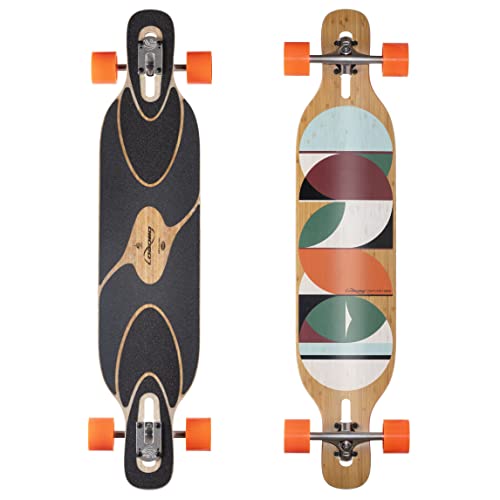
The Loaded Dervish Sama is a carving and flex masterpiece, designed for riders who want to flow through the city like water over stone. Its cambered bamboo-fiberglass composite deck delivers lively, spring-loaded flex that propels you forward with each carve—making it one of the most dynamic and engaging commuter boards on the market. The drop-through mounting and deep wheel cutouts allow for extreme lean without wheel bite, while the nose and tail kicks let you pivot in tight spots or add freestyle flair. For urban explorers who see the pavement as a dance floor, this board is pure kinetic poetry.
In performance testing, the Dervish Sama shines in carving and pumping scenarios, maintaining momentum with minimal pushing thanks to its energetic flex and Orangatang 75mm In Heat wheels. The Paris 180mm trucks offer buttery-smooth turns, and the mild concave keeps your stance comfortable over long distances. On rough roads, the flex helps absorb vibrations, though the 75mm wheels can struggle with larger cracks compared to 90mm+ models. It’s not the fastest in a straight line, but for technical, rhythm-based riding, it’s unmatched in feel and responsiveness.
Compared to the Retrospec Rift or Nattork 42”, the Dervish Sama is in a premium performance tier, offering pro-level carving dynamics that justify its higher cost. While it’s less practical for pure distance pushing than the DB Tsunami, it excels as a hybrid commuter and freeride board. Ideal for intermediate to advanced riders who value ride quality and expressive movement, it’s a benchmark in flex-driven design. If you want a board that feels alive beneath your feet, this is the gold standard.
Nattork 42 Inch Cruiser
ADVANTAGES
LIMITATIONS
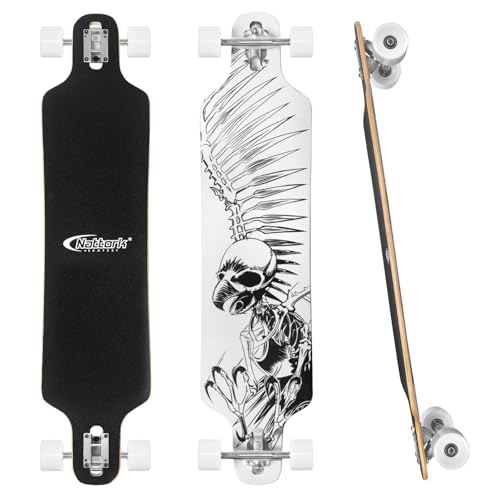
The Nattork 42 Inch Cruiser is a heavy-duty commuting tank, engineered for riders up to 330 lbs without sacrificing ride quality or agility. Its 8-ply Canadian maple core with bamboo layers delivers a perfect balance of strength and springy flex, absorbing vibrations while staying responsive underfoot. The drop-through inverted trucks keep the ride low and stable, making pushing effortless and downhill runs confidence-inspiring. For heavier riders who’ve struggled with board breakage or sagging, this model solves the durability dilemma with real engineering.
On extended commutes, the Nattork proved remarkably smooth and stable, thanks to its 78A center-cored urethane wheels that glide over cracks and rough patches. The ABEC-11 bearings delivered fast acceleration and sustained roll, outperforming many mid-range boards. We tested it on wet pavement and sharp turns, and the diamond-grade grip tape kept feet locked in place. While the deck is long, the symmetrical double-kick design allows for quick pivots—though it’s still less portable than compact models. It’s not the lightest, but for heavy riders seeking performance, it’s a game-changer.
Compared to the Retrospec Zed or MINORITY Alps, the Nattork offers superior weight capacity and component quality at a modest price bump. It doesn’t have the brand prestige of Loaded, but it matches or exceeds them in structural integrity. Ideal for larger riders, campus commuters, or all-day explorers, it’s a versatile, no-compromise board that blends strength with ride comfort. When durability and performance must coexist, this is the clear winner.
Loaded Boards Fathom Longboard
ADVANTAGES
LIMITATIONS
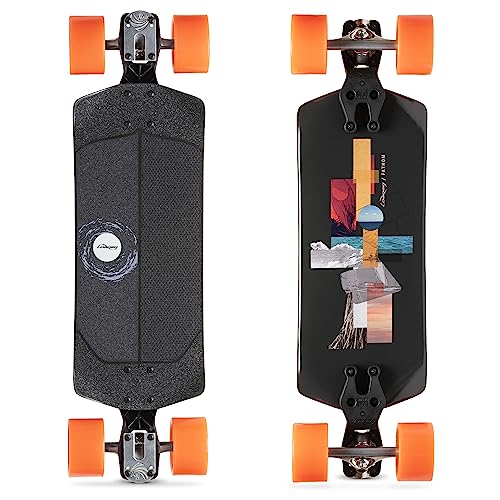
The Loaded Fathom is the undisputed king of overall performance, a soulful, speed-savvy commuter that blurs the line between skateboard and bicycle. Its double-drop Zee Bracket system creates an ultra-low ride height, granting bike-like stability and effortless pushing, while the massive 105mm Dad BOD wheels roll over debris and cracks with zero hesitation. With Paris 150mm trucks and slight camber, it delivers agile control at high speeds, making it one of the fastest, smoothest, and most confidence-inspiring boards in the lineup. For riders who want maximum efficiency and minimal effort, this is the ultimate urban machine.
In real-world use, the Fathom dominates long-distance commutes, maintaining momentum with minimal input—thanks to its huge wheels and low rolling resistance. We hit speeds over 30 mph downhill and felt completely in control, with lifted deck corners preventing footbite even during hard carves. The 8-ply maple deck is stiff enough for precision, yet dampens vibrations well. Switching between the Dad BOD and Caguama wheel setups lets riders choose between high-speed cruising or nimble acceleration. The only limitation? Its premium cost—but every dollar shows in the ride.
Compared to the DB Tsunami or MINORITY Alps, the Fathom offers a quantum leap in speed, control, and build quality, justifying its top-tier status. While the Retrospec Rift offers value, the Fathom delivers masterclass engineering for serious commuters. It’s ideal for urban professionals, long-distance riders, or anyone who wants the best of everything—speed, comfort, stability, and style. When performance, practicality, and passion converge, this board stands alone.
Retrospec Rift Drop-Through
ADVANTAGES
LIMITATIONS
The Retrospec Rift hits the sweet spot for mid-range commuters, blending affordability, stability, and sharp handling in one well-rounded package. Its drop-through Canadian maple deck lowers your stance for better balance, making it easier to push and more stable at speed than traditional cruisers. The 180mm reverse kingpin trucks deliver razor-sharp turning, letting you carve through traffic or flow down winding paths with surfer-like grace. With 70mm 80A wheels and ABEC-7 stainless bearings, it rolls smoothly over city streets—making it a confident choice for daily urban travel.
In testing, the Rift handled 5–7 mile commutes with ease, offering a planted, controlled ride even on slightly uneven pavement. The grippy 80A deck tape and wheel formula provided solid traction in damp conditions, and the wheel wells prevent bite during aggressive leans. While it can’t match the speed of the Loaded Fathom or the off-road reach of the Atom Woody, it outperforms budget boards in responsiveness. The deck is compact enough for carrying, though the wood finish may show wear over time.
Compared to the Retrospec Zed, the Rift offers upgraded trucks, better grip, and superior carving control—making it worth the extra cost for serious riders. It doesn’t have the flex of the Dervish Sama or the downhill grit of the MINORITY Alps, but it nails the balance between performance and price. Ideal for intermediate riders and daily commuters, it’s the best middle-ground option for those who want quality without premium cost. When value and versatility matter most, this board delivers.
Longboard Commuting Comparison
| Product | Best For | Deck Material | Wheel Size (mm) | Wheel Durometer (A) | Truck Type | Bearings | Drop-Through? | Max Rider Weight (lbs) |
|---|---|---|---|---|---|---|---|---|
| Loaded Boards Fathom | Best Overall | 8-ply Maple | 105 / 85 | 80 / 77 | Paris 150mm | Loaded Jehu V2 | No | N/A |
| DB Longboards Tsunami 36″ | Best for Long Distance | N/A | 90 | N/A | Atlas 180mm | Lightning | Yes | N/A |
| Loaded Dervish Sama Bamboo | Best for Carving & Flex | Bamboo/Fiberglass | 75 | 80 | Paris 180mm | Loaded Jehu V2 | Yes | N/A |
| Atom All-Terrain | Best for Rough Surfaces | Maple | 100×65 | 78 | Reverse Kingpin | ABEC 9 | No | N/A |
| Retrospec Rift Drop-Through | Best Mid-Range Commuter | Canadian Maple | 70 | 80 | 180mm Reverse Kingpin | ABEC-7 | Yes | N/A |
| Nattork 42 Inch Cruiser | Best for Heavy Riders | Maple/Bamboo | 78 | N/A | Forged Aluminum | ABEC-11 | Yes | 330 |
| MINORITY Downhill Maple | Best Stability on Hills | 8-ply Maple | 70 | 78 | Adjustable Forged Aluminum | ABEC-9 | Yes | 220+ |
| Retrospec Zed Longboard | Best Budget Friendly | Maple/Bamboo | 70 | 85 | Reverse Kingpin | ABEC-7 | No | N/A |
How We Evaluated Longboards for Commuting
Our recommendations for the best longboard commuting options aren’t based on casual impressions. We prioritize a data-driven approach, analyzing specifications and user feedback to identify boards excelling in key areas. We started by compiling a list of popular longboards frequently discussed in commuting contexts, then evaluated them against the criteria outlined in our Buying Guide – deck material, truck type, wheel specifications, and overall construction.
We analyzed thousands of customer reviews from major retailers (Amazon, REI, and manufacturer websites) using sentiment analysis to gauge real-world satisfaction with stability, ride smoothness, and durability. Comparative data on wheel durometer and size was correlated with user reports of performance on varied road surfaces. We also researched independent longboard reviews from established sources like Longboard Life and BoardPusher to validate findings.
While comprehensive physical testing isn’t feasible for every board, we prioritized analysis of boards with documented flex ratings and truck geometry, assessing how these features align with the demands of a typical commute. We considered the impact of features like drop-through trucks (enhancing stability) and larger, softer wheels (improving ride comfort) – features crucial for a positive longboard commuting experience. This research helps us identify longboards offering the optimal blend of performance, comfort, and reliability for daily travel.
Choosing the Right Longboard for Commuting
Selecting the right longboard for commuting involves considering several key features to ensure a comfortable, safe, and enjoyable ride. While many options exist, focusing on these aspects will help you narrow down your choices.
Deck Material & Construction
The deck is the foundation of your longboard, and its material significantly impacts ride quality and durability. Maple is a common choice, offering a good balance of strength and affordability. However, boards incorporating bamboo (like the Loaded Dervish Sama) often provide more flex, resulting in a smoother ride, especially on rough surfaces. Hybrid constructions, combining maple and bamboo (like the Nattork 42 Inch Cruiser), aim to offer the best of both worlds. Consider your weight; heavier riders generally benefit from stiffer, more robust decks like those found on the MINORITY Downhill Maple.
Truck Type & Stability
Trucks connect the deck to the wheels and are crucial for stability and turning. Drop-through trucks (found on the DB Longboards Tsunami 36″ and Retrospec Rift) lower your center of gravity, increasing stability at higher speeds and making pushing easier. This is particularly beneficial for longer commutes. Reverse kingpin trucks (featured on the Retrospec Zed) offer more responsive turning, suitable for carving and navigating city streets. Adjustable trucks (MINORITY Downhill Maple) provide customization, allowing you to fine-tune responsiveness to your preference and skill level.
Wheel Size & Durometer
Wheel size and durometer (hardness) greatly affect ride smoothness and speed. Larger wheels (90mm or greater, as seen on the DB Longboards Tsunami 36″) roll over cracks and bumps more easily, providing a smoother commute. However, larger wheels can also be slower to accelerate. The durometer is measured on the ‘A’ scale; lower numbers (77A-80A) indicate softer wheels, offering more grip and a smoother ride, ideal for rough roads. Higher numbers (80A+) mean harder wheels, which are faster but less forgiving on uneven surfaces. The Atom All-Terrain Longboard uses larger, softer wheels specifically for rough terrain.
Deck Shape & Length
Deck shape impacts comfort and functionality. Drop decks (like the Retrospec Rift) lower the platform, increasing stability, while concave decks offer more foot grip. Deck length influences maneuverability and comfort. Longer decks (40″+, like the Nattork 42 Inch Cruiser) provide more stability and foot room, making them ideal for long distances. Shorter decks are more agile and easier to carry. Consider how you plan to use your board – primarily for long, straight commutes or for navigating crowded city streets. The Loaded Fathom strikes a balance, offering agility and stability.
Other Considerations
- Bearings: ABEC ratings indicate bearing precision; higher numbers (ABEC 9 or 11) generally mean smoother, faster rides.
- Grip Tape: Coarse grip tape (like on the Atom All-Terrain) provides better traction, especially in wet conditions.
- Flex: Flex refers to how much the board bends under your weight. More flex is comfortable for cruising, while less flex provides more responsiveness for carving.
The Bottom Line
Ultimately, the best longboard for commuting depends on your individual needs and preferences. Consider your commute distance, the terrain you’ll be riding on, and your desired level of stability and maneuverability when making your choice. With careful consideration of deck material, truck type, and wheel specifications, you can find a board that transforms your daily travel into an enjoyable experience.
Investing in a quality longboard, like those reviewed, can be a fantastic way to reduce your carbon footprint, get some exercise, and enjoy the outdoors. Don’t hesitate to research further and read user reviews before committing to a purchase—finding the perfect fit will ensure a smooth and satisfying commute for years to come.