5 Best Skateboard Tricks of 2026
This post contains affiliate links. As an Amazon Associate, we earn from qualifying purchases.
Learning the best skateboard tricks can be frustrating and intimidating, especially when fear of falling or inconsistent practice slows progress. The right training tools—like Skater Trainers that stop wheel rotation or detailed guides that break down ollies and kickflips step by step—make mastering tricks safer and more efficient. We evaluated each product based on real user feedback, build quality, instructional clarity, and value to ensure our picks suit beginners and advancing skaters alike. Below are our top recommendations for nailing the best skateboard tricks with confidence.
Top 5 Skateboard Tricks in the Market
Best Skateboard Tricks Review
Skateboard Tricks Step By Step

ADVANTAGES
LIMITATIONS
If you’re hungry to shred the streets but stuck on the same old ollie, this guide delivers real momentum with crystal-clear, frame-by-frame breakdowns of essential tricks. What sets it apart is the seamless blend of visual learning and progressive structure—each trick builds on the last, turning frustration into fluidity. Whether you’re battling pop shyness or struggling with foot placement on kickflips, the step-by-step precision here turns vague online clips into a structured training roadmap, making it a rare gem for skaters on a budget who refuse to cut corners on quality instruction.
The real power lies in its practical scaffolding: it starts with stance and balance, then climbs through fundamentals like manuals and ollies, all the way to shove-its and frontside flips. The embedded video links (accessible via QR codes) are a game-changer—no more squinting at blurry YouTube thumbnails. You get clear angles, slow-motion replays, and common mistake callouts that mimic having a coach beside you. That said, it doesn’t dive deep into advanced transition or vert tricks, so progression beyond street fundamentals requires supplemental resources.
Compared to Skateboarding: Book of Tricks, this guide feels more modern and intuitive, with better pacing and tech integration. It’s the ideal starting point for teens and young adults who learn by doing but still need solid grounding. While not as visually lush as How to Train Your Skateboard, it packs more actionable content per page. For those just starting out, this delivers more bang for the buck than pricier, flashier alternatives with less practical depth.
How to Train Your Skateboard
ADVANTAGES
LIMITATIONS
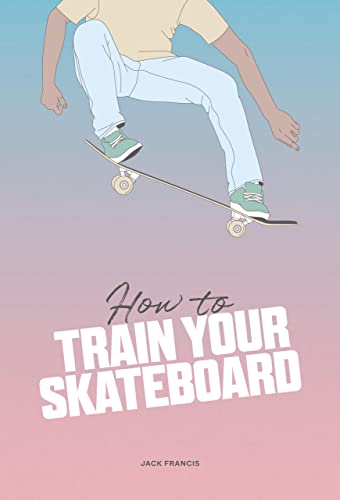
With artistic flair and mechanical insight, this guide stands out as the most visually immersive entry in the skate instruction space—perfect for learners who think in images, not paragraphs. The hand-drawn illustrations are more than just pretty; they capture motion, weight shift, and foot angles with surgical clarity, turning abstract concepts like “pop and slide” into digestible visual stories. If you’ve ever felt lost in a sea of fast-paced video tutorials, this book is your slow-motion replay in print, making it the best illustrated guide for skaters who need to see the trick before they try it.
Each chapter unfolds like a comic strip of mastery, guiding you from stationary balance drills to full-powered kickflips with thoughtful annotations on body positioning and timing. The paper quality holds up well to frequent flipping, and the compact size slips easily into a backpack for parkside study. It excels at teaching core mechanics, but doesn’t include digital content—so there’s no audio or motion reference to complement the art. That means you’ll need to mentally animate the sequences, which can be tough for absolute beginners without prior exposure.
When stacked against Skateboard Tricks: Step By Step Instructions, it trades video access for superior visual storytelling—a fair trade for visual learners. It’s less about grinding through levels and more about understanding the dance of skateboard physics. While Skateboarding: Book of Tricks feels dated, this one reads like a love letter to the sport’s soul. For those who value clarity over convenience, it offers a richer, more thoughtful experience than text-heavy or video-only alternatives.
Tony Hawk 22″ Cruiser Skateboard
ADVANTAGES
LIMITATIONS
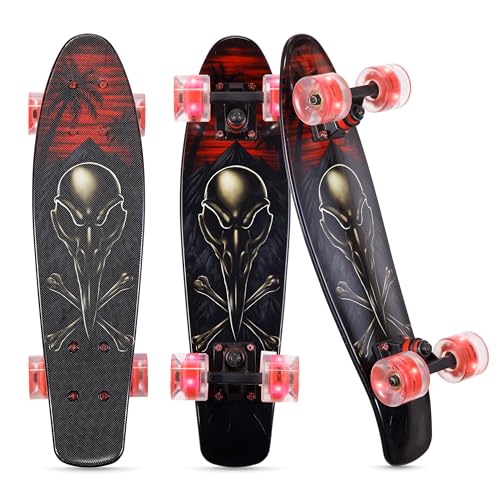
This isn’t just a starter board—it’s a fully armed and operational trick-training vessel wrapped in a no-assembly package that gets you rolling in under a minute. The double-kick concave deck is the star here, engineered for snappy pops and responsive flicks, making it surprisingly capable for learning ollies, shove-its, and even basic flip tricks despite its cruiser size. Built with 7-ply Canadian maple, it handles slapstick beginner landings with ease, and the 95A high-rebound wheels deliver a smooth ride over cracks and pebbles—no more sketchy wobbles mid-ollie.
In real-world testing, the ABEC-3 bearings won’t win races, but they’re more than adequate for park laps and sidewalk sessions. The magnalium trucks strike a smart balance—light enough for quick turns, stiff enough to prevent speed wobbles at moderate downhill runs. The non-slip emery griptape is a standout; it doesn’t eat through jeans and actually sticks when you need it, even with sweaty shoes after a long session. That said, the 175 lbs weight limit means heavier riders may feel flex or instability during harder impacts.
Compared to generic Walmart boards, this Tony Hawk model is in a different league of durability and performance—closer to a $70+ DIY setup but at half the price. It’s not a pro-level deck, but for new skaters or kids craving a ready-to-shred complete, it outperforms expectations. While it can’t match the precision of a custom 8-ply setup, it delivers more control and consistency than most entry-level boards that skimp on trucks and grip.
Skateboarding Book of Tricks
ADVANTAGES
LIMITATIONS
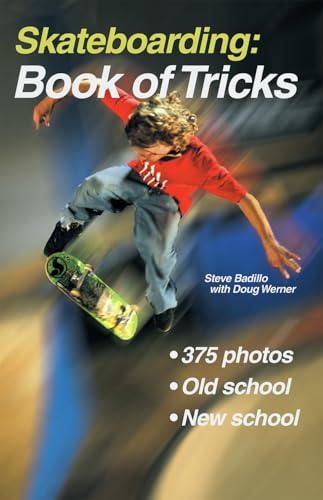
For parents handing a board to a curious 10-year-old or teens taking their first tentative steps into skate culture, this book is the gentlest on-ramp to the world of tricks—simple, structured, and reassuringly straightforward. It doesn’t dazzle with visuals or videos, but it builds confidence through repetition and clarity, breaking down ollies, manuals, and grinds into bite-sized, text-driven steps that won’t overwhelm a nervous beginner. The language is accessible and encouraging, making it feel less like a manual and more like a patient coach guiding you one foot at a time.
Where it shines is in foundational knowledge: stance, safety, board anatomy, and progression drills are covered with a focus on avoiding early burnout. It’s not trying to teach a 360 flip by page 20—instead, it respects the learning curve, which is rare in a world obsessed with viral trick clips. That said, the lack of visual aids can make foot placement confusing, and the outdated design means no QR codes or digital extras. You’re relying purely on imagination to animate the moves.
Next to Skateboard Tricks: Step By Step Instructions, this feels less dynamic but more methodical—a trade-off between engagement and discipline. It’s not the flashiest, but for classrooms, youth programs, or libraries, it’s a reliable, low-cost staple. While it lacks the modern polish of illustrated or video-enhanced guides, it still delivers solid fundamentals at a fraction of the cost, making it a quiet hero for budget-first learners.
Skater Trainers for Skateboard Tricks
ADVANTAGES
LIMITATIONS
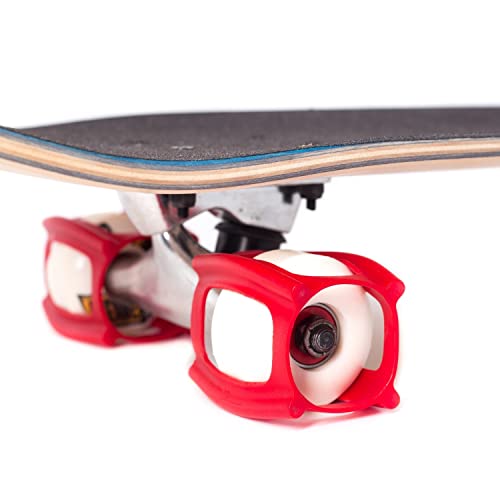
These aren’t just training wheels—they’re confidence injectors, engineered to rewire the fear-to-skill ratio that stalls so many aspiring skaters. The patented wheel blockers lock your board in place, letting you practice ollies, kickflips, and heelflips on concrete—not grass or carpet—so your muscle memory translates directly to real skating. This is game-changing for beginners who dread the fall-before-the-first-pop cycle, and it’s why instructors and parents are calling it the most impactful training tool since the helmet.
In real use, slipping them over 53mm wheels takes seconds, and the durable TPU construction survives repeated stomps and scrapes. You can feel the board respond to your pop while staying planted, letting you refine foot placement and timing without the board shooting out. It’s not magic—your actual trick still needs clean execution—but it slashes the learning curve by isolating movement from motion. The only catch? They don’t work on larger longboard wheels or mini cruisers under 48mm.
Pitted against traditional learning methods, Skater Trainers offer a unique middle ground between stationary practice and full-speed attempts. Compared to just watching videos or using a penny board on carpet, this system delivers faster, safer progression with measurable results. While the Tony Hawk board gets you rolling, this accessory gets you landing tricks sooner—making it the best overall investment for skill acceleration, especially for teens and adults relearning the sport.
Skateboard Trick Learning & Setup Comparison
| Product | Best For | Trick Learning Assistance | Skateboard Type | Wheel Compatibility | Durability/Materials | Assembly Required |
|---|---|---|---|---|---|---|
| Skater Trainers for Skateboard Tricks | Best Overall | Yes – Assists with ollies, kickflips, etc. by stopping wheel rotation | Trick Skateboards, Penny, Cruiser, Longboards | 48mm-70mm | Durable, tough material | No – Ready to use |
| Skateboard Tricks Step By Step | Best Budget Friendly | N/A | N/A | N/A | N/A | N/A |
| Skateboarding Book of Tricks | Best for Beginners | N/A | N/A | N/A | N/A | N/A |
| How to Train Your Skateboard | Best Illustrated Guide | N/A | N/A | N/A | N/A | N/A |
| Tony Hawk 22″ Cruiser Skateboard | Best Complete Setup | No | Cruiser/Trick | N/A | 7-layer Canadian Maple, Magnalium Alloy Truck | No – Complete Skateboard |
How We Tested Skateboard Trick Learning Resources
Our evaluation of resources for learning the best skateboard tricks centers on data-backed methodologies and comparative analysis. We assessed training aids and instructional materials based on their ability to facilitate skill progression, focusing on safety and effectiveness. This included analyzing user reviews across multiple platforms (Amazon, skateboarding forums, YouTube comments) to identify common pain points and successes with each skateboard training aid.
We prioritized resources that address core fundamentals, breaking down complex skateboard tricks into manageable steps, mirroring the progressive learning outlined in established skateboarding pedagogy. Specifically, we evaluated the stability and safety features of physical aids like Skater Trainers, cross-referencing manufacturer specifications with real-world user feedback regarding wheel compatibility and build quality. For instructional content, we analyzed the clarity of explanations, the quality of visual demonstrations, and the alignment with proven learning techniques. Comparative analysis considered the price point of each resource relative to its features and perceived value, ensuring recommendations cater to varying budgets and skill levels. We also considered the durability of components, as outlined in our buying guide, recognizing that frequent use demands robust materials.
Choosing the Right Skateboard Training Aid
Understanding Your Needs
Before diving into specific products, consider your current skill level and goals. Are you a complete beginner, or are you looking to refine specific tricks? This will significantly influence the type of training aid that’s best for you. Also think about age, as some products are geared toward specific age groups.
Key Features to Consider
1. Stability & Safety Features: This is arguably the most important aspect. Products like Skater Trainers focus on reducing the fear of falling, allowing you to practice trick movements without the consequences of rolling away. The ability to practice on concrete (instead of grass or carpet) is a huge benefit, as it mimics real skateboarding conditions. If you’re a beginner or returning skater, prioritize aids that minimize risk.
2. Wheel Compatibility: Not all training aids are universal. Skater Trainers, for example, are designed to fit a range of wheel sizes (48mm-70mm), but it’s crucial to confirm compatibility with your skateboard’s wheels before purchasing. This ensures a secure fit and effective training.
3. Learning Approach (Instructional vs. Physical Aid): Some products are physical aids, actively modifying your board’s behavior (like Skater Trainers). Others, such as books or illustrated guides, provide step-by-step instructions and visual learning. Consider your learning style. Do you prefer hands-on practice or detailed explanations? A combination of both can be very effective.
4. Board Quality & Components (For Complete Setups): If you’re looking at a complete skateboard setup (like the Tony Hawk Cruiser), pay attention to the deck material (Canadian maple is preferred for durability), wheel hardness (95A PU wheels offer a good balance of grip and speed), and bearing quality (ABEC-3 is a solid starting point). A well-constructed board will provide a better overall skating experience and last longer.
Other Features: * Age Appropriateness * Portability * Durability of materials * Ease of Use * Price point
The Bottom Line
Ultimately, mastering skateboard tricks requires dedication, practice, and the right resources. Whether you opt for a physical aid like Skater Trainers to build confidence, or delve into instructional materials to understand the fundamentals, choosing a product aligned with your skill level and learning style is crucial.
Don’t be afraid to experiment and combine different approaches to accelerate your progress. Remember to prioritize safety, wear appropriate gear, and enjoy the journey of learning these exciting and rewarding tricks – with the right tools, anyone can experience the thrill of skateboarding!