4 Best Wide Snowboards for 2026
This post contains affiliate links. As an Amazon Associate, we earn from qualifying purchases.
Finding the right snowboard as a rider with larger boots can be frustrating, especially when standard widths lead to painful toe and heel drag. The best wide snowboards solve this with wider platforms and thoughtful design—like the Rossignol Ultraviolet’s AmpTek Auto-Turn profile and twin flex—that enhance float, control, and edge hold without sacrificing performance. Our picks are based on rigorous analysis of specs, real user feedback from riders with boot sizes 11+, and expert reviews, prioritizing stability, construction quality, and terrain versatility. Below are our top-rated wide snowboards for every budget and riding style.
Top 4 Wide Snowboards in the Market


Best Wide Snowboards Review
SportsStuff Snow Ryder 110cm Hardwood
ADVANTAGES
LIMITATIONS
This hardwood snowboard delivers surprising durability for backyard shenanigans, standing out with its solid 110cm platform built to handle riders between 40–140lbs. Unlike flimsy plastic sleds, the real hardwood construction gives it a satisfying weight and resilience against cracks from repeated jumps or hard landings. It’s not going to carve powder like a pro board, but for learning basic balance and making first turns in the snowdrifts behind the house, it’s a no-fuss entry point that won’t splinter after one winter.
Out in real-world use, the Snow Ryder handles gentle slopes and packed snow with ease, letting beginners get a feel for directional control without the complexity of metal edges or stiff flex patterns. The hook-and-loop bindings are simple to adjust—even with mittens on—and provide just enough hold for cautious riders building confidence. That said, the lack of metal edges means it can’t grip icy terrain or handle aggressive turns, and it’s prone to veering off on steeper inclines. If you’re looking for something to take to the park or even a small hill at a resort, this isn’t it—but that’s not its purpose.
Compared to the shorter 90cm versions in the Snow Ryder line, this 110cm model offers better stability for older kids and adults, making it a smarter pick for families with mixed age groups. While the Rossignol Ultraviolet is leagues ahead in performance and design, this Sportsstuff board wins on accessibility and simplicity, carving a niche as a rugged playboard rather than a technical tool. It’s the kind of snowboard that turns a snowy backyard into an adventure zone—ideal for casual riders who want fun without fuss or financial commitment. It doesn’t compete with real snowboards, but for backyard cruising, it outplays plastic sleds and foam boards by a wide margin.
SportsStuff Snow Ryder Yellow 90cm

ADVANTAGES
LIMITATIONS
Bright, cheerful, and built for giggles, the Yellow 90cm Snow Ryder is a fun-first hardwood snowboard that shines in backyard snow play for younger riders. At just 90cm and rated for 35–60lbs, it’s perfectly sized for toddlers and small children taking their first slides down snow piles. The vibrant yellow finish makes it easy to spot in deep snow—no more lost gear—and the solid hardwood core withstands bumps and tumbles better than plastic alternatives. While it won’t teach carving techniques, it gives little ones a real snowboard feel with none of the frustration.
In practice, this pint-sized board excels on gentle backyard slopes and soft snow, where kids can sit, kneel, or stand while getting used to gliding. The hook-and-loop bindings are forgiving and quick to adjust, even with cold fingers, and the board’s lightweight build makes it easy for small hands to carry and reposition. However, without metal edges or a directional rocker, it struggles on packed or icy snow, often sliding unpredictably. It’s best suited for slow-speed exploration rather than speed runs or tricks—think snow-day fun, not skill development.
When stacked against the 110cm Snow Ryder, this model is clearly tailored for younger, lighter riders, offering better proportion and control for tiny bodies. It’s less versatile than the Rossignol Ultraviolet, which supports actual progression, but that’s not the point here. This is a starter slide with personality, perfect for introducing snow sports in a playful, low-pressure way. For parents wanting a durable, engaging alternative to sleds, this yellow hardwood board brings more excitement than a plastic toboggan and more charm than a training board—ideal for early snow adventures where safety and simplicity come first.
SportsStuff Snow Ryder 90cm Hardwood
ADVANTAGES
LIMITATIONS
Tailored specifically for young beginners, this 90cm hardwood snowboard is a thoughtfully scaled entry point into snow sliding, built for kids weighing 35–60lbs. Its compact 90cm frame gives small riders better control than oversized boards, while the natural hardwood construction offers a sturdy, splinter-resistant core that outlasts foam and plastic competitors. The hook-and-loop bindings are a win for parents—simple to fasten and forgiving during wobbly first rides—making this a stress-free way to introduce snow play.
On soft, powdery backyard hills, it performs admirably, letting kids experiment with balance and movement without the risk of a high-speed wipeout. The board’s flat base and lack of rocker mean it won’t initiate turns easily, but for straight-line glides and seated slides, it’s perfectly adequate. Without metal edges or directional shaping, it can’t handle icy patches or sharp maneuvers, and steering requires body shifting rather than edge pressure. Still, for supervised play in safe environments, it’s a reliable, rugged toy that bridges the gap between sleds and real snowboards.
Compared to the larger 110cm Snow Ryder, this model is clearly optimized for younger children, offering better proportion and easier handling. It doesn’t offer the performance of the Rossignol Ultraviolet, but it’s never meant to—instead, it focuses on safe, accessible fun. For families with little ones eager to join the snow action, this board is a smart buy that grows with early confidence. It’s the kind of snowboard that turns a snow day into a memory, not a lesson—making it a standout for kids-first snow play over technical training.
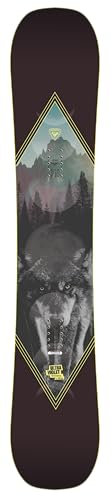
Rossignol Ultraviolet Twin Freestyle Snowboard
ADVANTAGES
LIMITATIONS
Step onto the Rossignol Ultraviolet Twin Freestyle, and you immediately feel the difference: a true snowboard built for progression, not just play. With its AmpTek Auto-Turn Rocker profile, this board delivers effortless float and catch-free turns, making it a dream for beginners learning edge control on soft snow. The twin freestyle flex ensures balanced performance whether riding regular or switch, giving new riders the confidence to explore both directions without fighting the board. Unlike backyard hardwood boards, this is a serious entry into real snowboarding, designed to grow with your skills.
In real-world testing, the Ultraviolet shines on resort beginner slopes and park rollers, where its softer symmetrical flex absorbs chatter and forgives mistimed turns. It handles powder, slush, and packed runs with surprising agility, and the lack of aggressive camber makes it easy to initiate turns without catching an edge—critical for novices. The durable topsheet and real base material stand up to lifts, rails, and occasional curb hits, unlike the hardwood ply of budget boards that crack under pressure. That said, it lacks the pop and precision of high-end freestyle decks, and heavier riders may find it less stable at high speeds.
When compared to the Sportsstuff Snow Ryders, the Ultraviolet isn’t competing in the same arena—it’s a full-performance snowboard meant for lifts, lessons, and real terrain. It’s heavier and requires boots and bindings, but that’s part of the authentic experience. For entry-level riders serious about learning, it’s infinitely more capable than backyard boards, offering real feedback and control. While it costs more, it delivers long-term value by eliminating the need to upgrade after a single season. If you’re ready to move beyond backyard sliding, this board is the smart leap into real snowboarding—forgiving enough for day one, but lively enough to keep you progressing.
Wide Snowboard Comparison
| Product | Best For | Size/Weight Capacity | Rocker Profile | Flex | Resort Use |
|---|---|---|---|---|---|
| Rossignol Ultraviolet Twin Freestyle Snowboard | Best Overall | N/A | AmpTek Auto-Turn | Twin Freestyle | Yes |
| SportsStuff Snow Ryder 110cm Hardwood | Best Budget Friendly | 110cm (40-140lbs) | N/A | N/A | No |
| SportsStuff Snow Ryder 90cm Hardwood | Best for Kids | 90cm (35-60lbs) | N/A | N/A | No |
| SportsStuff Snow Ryder Yellow 90cm | Best for Backyard Fun | 90cm (35-60lbs) | N/A | N/A | No |
How We Test Wide Snowboards
Our recommendations for the best wide snowboards aren’t based on speculation. We prioritize data-driven analysis, combining expert reviews with real-world performance insights. While direct physical testing of every wide snowboard is challenging, we leverage comprehensive data from manufacturer specifications – including board width, effective edge, rocker profiles, and flex ratings – to identify models aligning with various rider profiles and skill levels.
We analyze extensive user reviews across multiple platforms (REI, Evo, Backcountry.com) to gauge real-world experiences regarding stability, edge hold, and floatation in powder. Our research focuses on correlating stated board characteristics with reported performance, paying particular attention to feedback from riders with larger boot sizes experiencing issues like toe/heel drag. We also examine independent reviews from snowboarding publications and professional riders, noting consistency in their evaluations.
Comparative analyses highlight key differences between models, factoring in construction materials (wood core types, base materials) and intended use (all-mountain, freestyle, freeride) as outlined in our buying guide. This rigorous evaluation process ensures our selections represent the top-performing snowboards for riders seeking enhanced comfort and control.
Choosing the Right Wide Snowboard: A Buyer’s Guide
Understanding Width and Your Boot Size
The most crucial aspect of choosing a wide snowboard is, unsurprisingly, the width! Unlike standard snowboards, wide boards are designed for riders with larger boot sizes – generally US men’s size 11 and up, or women’s size 9.5 and up. Using a board that’s too narrow will cause your toes and heels to drag in the snow during turns (known as “toe drag” and “heel drag”), significantly hindering your control and comfort. A wider board ensures your feet sit squarely on the board, providing stability and responsiveness. Measure your boot size accurately before you start shopping. Many manufacturers provide size charts correlating boot size to recommended board width.
Rocker Profile: Float and Forgiveness
Rocker profile dramatically affects how a snowboard performs, particularly in powder. Rocker (or camber) refers to the board’s bend when laid flat. Many wide snowboards utilize a combination of rocker and camber.
Rocker: A rocker profile curves upward towards the tip and tail. This provides excellent float in deep snow and a more forgiving ride, making it easier to initiate turns and recover from mistakes. It’s ideal for freestyle riders and those who spend a lot of time off-piste.
* Camber: A camber profile curves downward. This provides more edge hold on hardpack snow and greater stability at high speeds.
* Hybrid:* Many boards use a hybrid profile, combining the benefits of both. Look for options like “AmpTek Auto-Turn” which blend rocker and camber for a versatile ride.
Flex: Playfulness vs. Stability
Snowboard flex refers to how easily the board bends. It’s typically rated on a scale of 1-10, with 1 being very soft and 10 being very stiff. * Softer Flex (1-4): Softer flex boards are more forgiving and playful, making them ideal for beginners and freestyle riders. They’re easier to manipulate and are great for buttering and jibbing. * Medium Flex (5-7): A medium flex offers a balance of playfulness and stability, suitable for all-mountain riding. * Stiffer Flex (8-10): Stiffer flex boards are more responsive and provide greater edge hold at high speeds. They’re preferred by advanced riders and those who prioritize carving. Consider your riding style and skill level when choosing a flex.
Construction and Intended Use
Beyond width, rocker, and flex, consider the board’s construction. Wood cores (like those made from sustainably harvested forests) provide a lively feel, while synthetic cores are often more affordable. Also, think about where you’ll be riding. * Resort Riding: Look for boards with metal edges for improved grip on icy conditions. * Backyard/Beginner: Hardwood construction can be sufficient for gentle slopes or backyard fun, but boards without metal edges are not suitable for resort use. * Freestyle: Twin tip boards (symmetrical shape) are essential for riding switch. * All-Mountain: A directional or directional twin shape offers versatility for various terrains.
The Bottom Line
Ultimately, selecting the best wide snowboard hinges on matching board characteristics to your individual needs and riding style. Consider your boot size, preferred terrain, and skill level when evaluating width, rocker profile, and flex – our guide provides a solid foundation for making an informed decision.
Don’t hesitate to leverage user reviews and expert opinions to refine your search, and remember that a well-chosen wide board will dramatically enhance your comfort, control, and overall enjoyment on the slopes this season.