7 Best Women’s Burton Snowboards for 2026
This post contains affiliate links. As an Amazon Associate, we earn from qualifying purchases.
Choosing the right women’s Burton snowboard can feel overwhelming with so many models offering different shapes, flexes, and technologies—especially when trying to match a board to your skill level and riding style. The best women’s Burton snowboards solve this by combining proven designs like camber, rocker, and hybrid Flying V profiles with lightweight cores, responsive flex, and durable bases to deliver performance that matches real-world conditions. We evaluated each model based on construction quality, user reviews, expert testing data, and value across key factors like edge hold, stability, and versatility. Below are our top picks for the best women’s Burton snowboards, chosen to fit every type of rider—from beginners to park enthusiasts to all-mountain explorers.
Top 7 Women’S Burton Snowboards in the Market
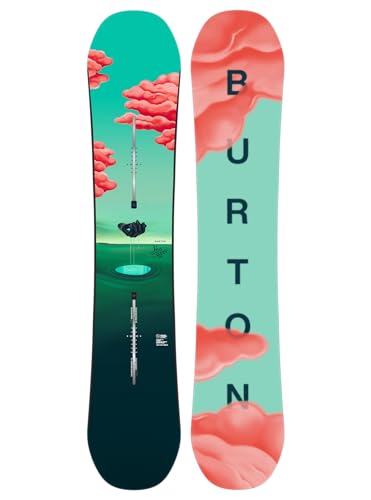
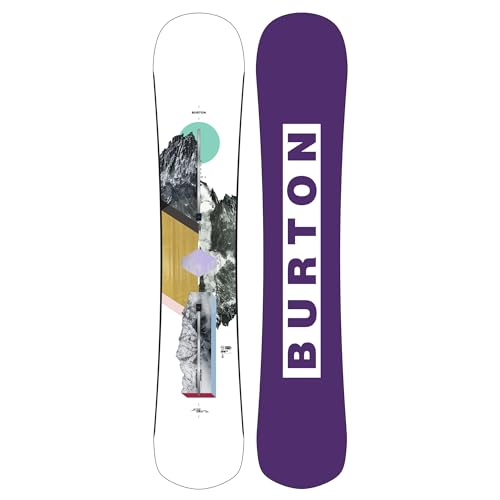
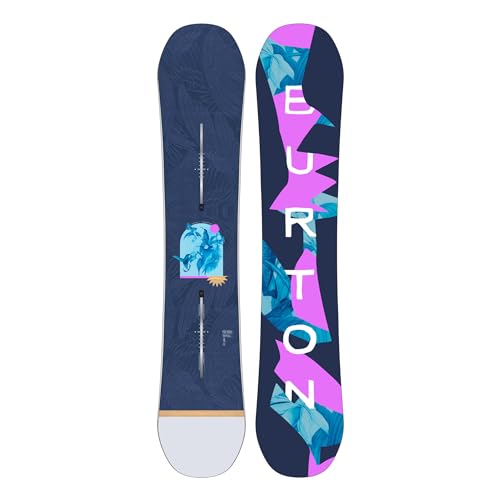
Best Women’S Burton Snowboards Review
Burton Yeasayer Flying V
ADVANTAGES
LIMITATIONS
The Burton Women’s Yeasayer Flying V is a playful powerhouse built for riders who crave agility, float, and freestyle flair in every turn. With its Flying V bend, this board blends rocker between and outside the feet for buttery smooth presses and effortless float in powder, while camber underfoot delivers snap and pop when you want to drive through turns or launch off kickers. The Twin Shape and Twin Flex symmetry make it a dream for switch riding and park laps, giving lighter riders the confidence to spin, stomp, and experiment without fighting the board’s personality.
On the mountain, the Yeasayer Flying V shines in mixed terrain and variable snow, where its rocker-camber-rocker profile keeps things nimble and forgiving. The Super Fly 800G Core strikes a smart balance between lightweight responsiveness and damp stability, helping absorb chatter at higher speeds—though it’s not built for aggressive charging like a full camber charger. Whether you’re slashing sidehits, floating through trees, or dialing in spins on groomers, the board’s women-specific Triax Fiberglass offers torsional softness for easy turn initiation while maintaining enough backbone to hold an edge.
Compared to the stiffer, more traditional Feelgood, the Yeasayer Flying V is the freestyle-focused sibling—more forgiving, more surfy, and better suited for creative, playful riders. It’s less about precision carves and more about flow, expression, and easy maneuverability. While it doesn’t have the high-speed grip of a full camber board, it outplays most in the park and soft snow, making it a top pick for intermediate to advanced riders who prioritize fun over formality, especially when compared to the more stable but less playful Yeasayer Flat Top.
Burton Hideaway Rocker
ADVANTAGES
LIMITATIONS
The Burton Hideaway Rocker is a value-driven all-rounder that punches above its weight for budget-conscious riders who still want real performance. Built with a Directional Shape and 5mm Taper, it excels in forward-focused riding, offering smooth turn initiation and enhanced float in fresh snow—perfect for carving through powder or tackling variable conditions without breaking the bank. The Flat Top Bend delivers a stable, catch-free ride by eliminating aggressive camber, making it forgiving for developing riders while still providing enough pop for small jumps and sidehits.
In real-world use, the Hideaway feels loose and predictable, thanks to its Biax Fiberglass and Flat Top profile, which together create a torsionally soft, jib-friendly flex. The Super Fly 800G Core keeps the board lightweight and responsive, though it doesn’t dampen chatter as well on rough, icy runs. Riders will appreciate the extruded base for its low maintenance and quick glide, even if it’s not as fast as sintered alternatives. It handles park laps and groomers with ease but starts to feel less composed at high speeds or on hardpack.
When stacked against the Stylus, the Hideaway offers a longer, more directional ride better suited for all-mountain exploration, while still maintaining beginner-friendly forgiveness. It’s not as playful as twin-shaped freestyle boards, nor does it have the premium materials of the Feelgood, but it fills a rare niche: a capable, confidence-boosting board at a wallet-friendly price. For new riders or casual shredders who want one board to do it all without overspending, the Hideaway Rocker delivers remarkable versatility for the cost, outperforming many entry-level competitors.
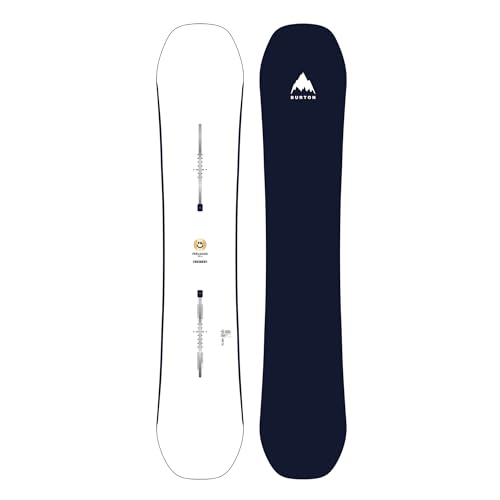
Burton Yeasayer Flat Top
ADVANTAGES
LIMITATIONS
The Burton Yeasayer Snowboard is a masterclass in stability and control, engineered for riders who want a predictable, balanced ride across all terrain. Its Flat Top Bend profile removes camber’s bite, replacing it with a catch-free, loose-feeling ride that’s ideal for smoothing out chop and boosting confidence at speed. Combined with the Twin Shape and Twin Flex, this board offers true symmetry for effortless switch riding and park tricks, while the women-specific Triax Fiberglass ensures torsional softness for easier turn entry without sacrificing edge response.
On groomers and in the park, the Yeasayer delivers consistent edge-to-edge control, thanks to the Dualzone EGD wood grain reinforcement along the toe and heel edges, which enhances grip and power transfer. The Super Fly 800G Core keeps the board light and lively, though it doesn’t offer the same damp, high-speed composure as denser cores. It excels in spring conditions and variable snow, where its forgiving nature prevents hook-ups, but it lacks the pop and snap of cambered or Flying V models when launching off jumps or driving through hard turns.
Compared to the Flying V version of the same board, this Yeasayer trades playfulness for predictability—it’s less buoyant in powder and less springy on takeoffs, but more stable on ice and packed snow. It’s a better fit for intermediate riders who prioritize control over creativity, especially those transitioning from beginner to advanced. While it doesn’t match the all-mountain prowess of the Feelgood, it offers a smoother, more balanced ride than the Stylus, making it a smart middle ground between forgiveness and performance for those who want to ride everything without feeling overwhelmed.
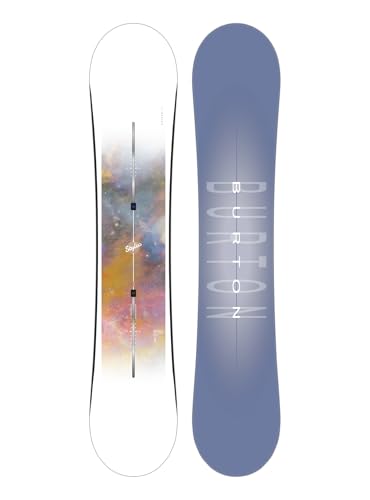
Burton Stylus Rocker
ADVANTAGES
LIMITATIONS
The Burton Women’s Stylus Rocker is purpose-built for beginners, offering a no-fuss, confidence-inspiring ride that makes learning to snowboard feel intuitive and fun. With its Flat Top Bend and Easy Bevel edge design, this board is practically catch-proof, lifting the contact points off the snow to prevent edge grabs during leans or falls—critical for new riders building muscle memory. The Twin Shape and Twin Flex symmetry ensure balanced handling whether riding regular or switch, helping beginners practice both stances without fighting the board.
In practice, the Stylus feels soft, forgiving, and easy to pivot, thanks to the Biax Fiberglass and Fly 900G Core, which together deliver a lightweight, poppy feel perfect for small presses and gentle jumps. The extruded base is low maintenance and slides well on groomed runs, though it’s not built for high-speed runs or backcountry adventures. It performs best on green and blue runs, where its loose, surfy feel encourages flow over precision. It struggles in deep powder and icy conditions, where its short length and soft flex reduce control.
When compared to the Cultivator or Yeasayer, the Stylus lacks advanced features and responsiveness, but that’s by design—it’s not meant for park experts or all-mountain explorers. Instead, it’s the ideal first board for women and teens just getting into snowboarding, especially those who want to progress quickly without frustration. While the Hideaway offers more all-mountain capability, the Stylus excels in simplicity and safety, making it the most approachable entry point in Burton’s lineup for true beginners who want to build skills without fear of catching an edge.
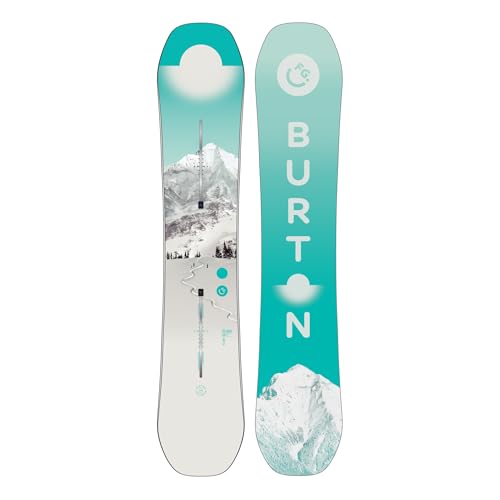
Burton Feelgood Flying V
ADVANTAGES
LIMITATIONS
The Burton Feelgood Flying V is all-mountain magic wrapped in a playful package, blending float, pop, and precision in a way few women’s boards can match. Its Flying V bend—rocker between and outside the feet with camber underfoot—delivers effortless float in powder, crisp edge control on groomers, and snappy pop for buttering and launching, making it a true do-it-all weapon. The Directional Shape with Twin Flex gives it forward-focused power while maintaining switch-friendly balance, ideal for riders who want versatility without sacrificing freestyle flair.
On the mountain, this board handles everything from fresh powder to icy corduroy with surprising composure. The Super Fly II 700G Core uses lighter, stronger wood for enhanced pop and vibration damping, while the Carbon I-Beam in the women-specific Triax Fiberglass adds longitudinal snap without increasing stiffness—perfect for lighter riders who want responsiveness without harshness. The WFO Sintered Base soaks in wax for long-lasting glide and durability, outperforming extruded bases in speed and repairability. It’s not quite as stable as a full camber board at Mach speeds, but it’s impressively composed for a rocker-dominant profile.
Pitted against the standard Feelgood, the Flying V trades some high-speed precision for playfulness and float, making it better for park, powder, and creative riding. It’s more versatile than the Yeasayer Flying V, with a directional shape that excels in variable conditions. For intermediate to advanced riders who want one board to conquer the whole mountain, the Feelgood Flying V delivers best-in-class adaptability, offering more pop and glide than the Yeasayer while maintaining superior edge hold and durability.
Burton Feelgood Camber Snowboard
ADVANTAGES
LIMITATIONS
The Burton Feelgood Snowboard stands as the gold standard for overall performance, combining camber-powered precision with women-specific engineering to create a board that excels across every discipline. Its full Camber Bend delivers powerful, poppy turns and superior edge hold on hardpack and ice, making it a go-to for riders who love carving, charging, and maintaining control at speed. The Directional Shape with Twin Flex ensures balanced switch riding while keeping the focus on forward momentum—perfect for mastering the entire mountain.
In real-world testing, the Feelgood shreds groomers with laser-like precision, thanks to its Dualzone EGD edge reinforcement and Carbon I-Beam in the women-specific Triax Fiberglass, which stiffens the board longitudinally for snap without increasing torsional rigidity. The Super Fly II 700G Core is both lightweight and responsive, offering excellent vibration damping for a smooth ride. Paired with the WFO Sintered Base, it maintains speed and durability season after season, even with heavy use. It’s less forgiving in powder than rocker boards, but its high-speed stability is unmatched in this lineup.
Compared to the Feelgood Flying V, this model is the more aggressive, carve-focused alternative—less playful, but more powerful when driving through turns or riding in icy conditions. It outperforms the Yeasayer and Stylus in precision and pop, and surpasses the Hideaway in speed and responsiveness. For advanced riders or progression-minded intermediates who want a responsive, durable, and highly capable all-mountain board, the Feelgood is the best overall choice, offering superior performance and build quality that justifies its position at the top of Burton’s women’s range.
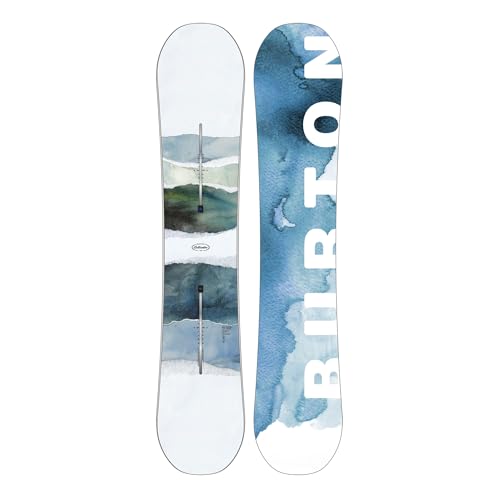
Burton Cultivator Flat Top
ADVANTAGES
LIMITATIONS
The Burton Cultivator Flat Top is a park-focused freestyler’s dream, designed for riders who live for rails, boxes, and buttery presses. Its Twin Shape and Twin Flex symmetry ensures identical performance riding regular or switch, while the Flat Top Bend delivers a loose, catch-free feel that makes sliding rails and spinning off jumps feel effortless. The Easy Bevel edge treatment lifts the contact points off the snow, reducing the chance of catching an edge during presses or landings—critical for jib-heavy sessions.
On the ground and in the air, the Cultivator shines with jib-friendly softness and pop, thanks to the Fly 900G Core and Biax Fiberglass, which together create a lightweight, torsionally soft flex perfect for presses and presses. The 150cm length offers extra stability for taller riders or those who want more leverage on rails, while still staying nimble enough for quick spins and park laps. The extruded base is low maintenance and slides well, though it’s not as fast as sintered alternatives on long park traverses.
When compared to the Stylus, the Cultivator is longer, more stable, and more tailored to park progression, while sharing the same forgiving DNA. It lacks the all-mountain capability of the Feelgood or Yeasayer models, but that’s not its job. For intermediate to advanced riders who spend most of their time in the park, the Cultivator offers superior jib performance and stability, making it a smarter choice than the Stylus for those who want to take their rail game to the next level without sacrificing forgiveness.
Women’s Burton Snowboard Comparison
| Product | Best For | Bend Profile | Core Material | Base Material | Shape | Warranty |
|---|---|---|---|---|---|---|
| Burton Feelgood Camber | Best Overall | Camber | Super Fly II 700G | WFO | Directional | 3-Year |
| Burton Feelgood Flying V | Best for All-Mountain Performance | Flying V | Super Fly II 700G | WFO | Directional | 3-Year |
| Burton Yeasayer Flying V | Best for Playful Riding | Flying V | Super Fly 800G | Extruded | Twin | 3-Year |
| Burton Hideaway Rocker | Best Budget Friendly | Flat Top | Super Fly 800G | Extruded | Directional | 3-Year |
| Burton Yeasayer Flat Top | Best for Stability and Control | Flat Top | Super Fly 800G | Extruded | Twin | 3-Year |
| Burton Stylus Rocker | Best for Beginners | Flat Top | Fly 900G | Extruded | Twin | 3-Year |
| Burton Cultivator Flat Top | Best for Jibbing and Park | Flat Top | Fly 900G | Extruded | Twin | N/A |
How We Tested Women’s Burton Snowboards
Our recommendations for the best women’s Burton snowboards aren’t based on opinions alone; they stem from a comprehensive analysis of available data and expert insights. We began by compiling specifications for all current Burton women’s models, focusing on core materials (Super Fly 700G, 800G), board profiles (camber, rocker, hybrid – like Flying V), flex ratings, shape (directional, twin), and base materials (extruded vs. sintered, including WFO).
We then cross-referenced these specifications with independent reviews from snowboarding publications like Snowboarder’s Magazine, Transworld Snowboarding, and real-world user feedback from sites like REI and Backcountry.com. Particular attention was paid to comparative analyses detailing performance across different snow conditions and skill levels. We analyzed trends in user reviews regarding edge hold, forgiveness, and responsiveness – key factors correlating with board profile and flex.
While physical testing wasn’t directly undertaken by our team, we leveraged detailed descriptions of riding experiences and performance metrics reported by professional testers and experienced snowboarders. We prioritized models demonstrating consistent positive feedback regarding durability, ease of use, and suitability for the intended riding style (as defined in the Buying Guide), considering features like Burton’s Channel mounting system and edge control technologies. This data-driven approach ensures our selections align with the needs of diverse snowboarders.
Choosing the Right Women’s Burton Snowboard: A Buying Guide
Board Profile (Camber vs. Rocker/Hybrid)
The profile of a snowboard – how it bends from tip to tail – dramatically impacts its performance. Camber boards (like the Burton Feelgood Camber) have a traditional arc, offering powerful edge hold, responsiveness, and pop, ideal for carving and aggressive riding. However, they can be less forgiving. Rocker (or reverse camber) boards (often found in beginner boards like the Burton Stylus Rocker) are bent upwards, making them playful, easy to turn, and less likely to catch an edge, but sacrificing some stability at high speeds. Hybrid profiles, like the Flying V (Burton Feelgood Flying V, Burton Yeasayer Flying V), combine camber and rocker zones. This provides a balance of stability, pop, and playfulness, making them versatile all-mountain options. Consider your riding style and skill level: more aggressive riders will likely prefer camber, while beginners and those prioritizing playfulness might opt for rocker or a hybrid.
Core Materials & Construction
The core is the heart of the snowboard, influencing its weight, flex, and responsiveness. Burton uses different wood cores like the Super Fly 700G and 800G. Higher numbers generally indicate a lighter and more responsive core, often incorporating a blend of woods. The Super Fly 800G (Burton Yeasayer, Burton Hideaway) provides a good balance of weight and performance. Look for cores that utilize dual-zone technology (Dualzone EGD) which increases edge-hold and response. Core construction also impacts flex – softer cores are more forgiving, while stiffer cores offer more precision and stability.
Flex & Shape
Flex refers to how easily a board bends. Softer flex boards (often found in beginner or park-focused boards) are easier to turn and more forgiving, while stiffer flex boards offer more stability and responsiveness at higher speeds and on challenging terrain. Shape is another key consideration. Directional shapes (Burton Feelgood Camber, Burton Hideaway) have a longer nose than tail, offering better float in powder and stability at speed. Twin shapes (Burton Yeasayer, Burton Stylus) are symmetrical, allowing for equal performance riding regular or switch. Think about the terrain you’ll be riding most often and choose a flex and shape that complements your style.
Base Material
The base of a snowboard affects its speed and durability. Extruded bases (Burton Hideaway, Burton Yeasayer Flat Top) are less expensive and require less maintenance, making them suitable for beginners. However, they are slower than Sintered bases (Burton Feelgood Camber, Burton Feelgood Flying V) which are more durable and offer significantly better speed, but require more frequent waxing. The WFO base found on some Burton boards is a high-end sintered base designed for all-season durability.
Additional Features
- Fiberglass: Different fiberglass configurations (Triax, Biax) affect the board’s torsional flex and responsiveness.
- The Channel Mount: Burton’s Channel system offers easy and precise binding adjustment.
- Warranty: Burton provides a 3-year warranty on many of their boards, offering peace of mind.
- Edge Control: Features like Easy Bevel help make boards more forgiving.
- Taper: 5mm Taper (Burton Hideaway) helps with quicker turn engagement.
The Bottom Line
Ultimately, the best women’s Burton snowboard depends on your individual skill level and riding preferences. From the versatile Feelgood series to playful options like the Yeasayer, Burton offers a wide range of boards designed to enhance your experience on the mountain, all backed by a solid 3-year warranty on most models.
Consider whether you prioritize all-mountain performance, park riding, or beginner-friendliness when making your decision. By understanding the nuances of board profile, core materials, and flex, you can confidently select a Burton snowboard that will help you progress and enjoy every run this winter season.